

Why Roband Is a Staple in New Zealand Hospitality
Busy cafés don't win service by luck. They win because the gear on the counter keeps doing the same job, at the same speed, when the breakfast rush hits, the lunch run starts, and a new staff member is still learning the rhythm of the line. That's why Roband has earned such a firm place in New Zealand hospitality, especially in venues that need dependable benchtop equipment that staff can pick up quickly and use with confidence.
Across New Zealand, hospitality is large enough that standardised counter equipment matters every day, not just in flagship venues. One industry summary reports 18,000+ food service establishments nationwide as of 2024/2025, including 3,410 restaurants, and says that figure was up 2.16% from 2023 (Restroworks). In a market like that, the question isn't whether a brand looks impressive on day one. It's whether it stays useful on day 1,000.
The Quiet Achiever in a Busy Kiwi Kitchen
A café line at 12.15 pm rarely gives anyone time to admire equipment. Staff want a press that closes the same way every time, a warmer that holds temperature without fuss, and a toaster that does its job without constant correction because service is already moving too fast. Roband stands out for that reason, as the piece of kit that keeps the line moving without drawing attention to itself.
Its place in New Zealand hospitality comes from repeated use, not showroom appeal. The brand has built a reputation with operators who want counter equipment they can trust day after day, and its range covers heat lamps, bain maries, pie warmers, hot and cold food bars, sandwich presses, toasters, salamanders, and milkshake makers. That breadth suits cafés, bakeries, takeaways, and other venues where the same machine is under pressure throughout the busiest parts of the day.
Practical rule: if a piece of equipment is meant to live on the counter, it should make the counter calmer, not louder.
Value sits in what the gear saves over time. A unit that staff already understand reduces training time, cuts mistakes during service, and avoids the stop-start rhythm that slows a busy pass. A reliable machine also helps preserve consistency across shifts, which matters when new staff are learning and experienced staff are already moving quickly. For a closer look at the sandwich press category, why Roband sandwich presses continue to lead the market reflects the same practical qualities many operators notice once the press is in daily use.
Looking Beyond Price The Real Value of Reliability
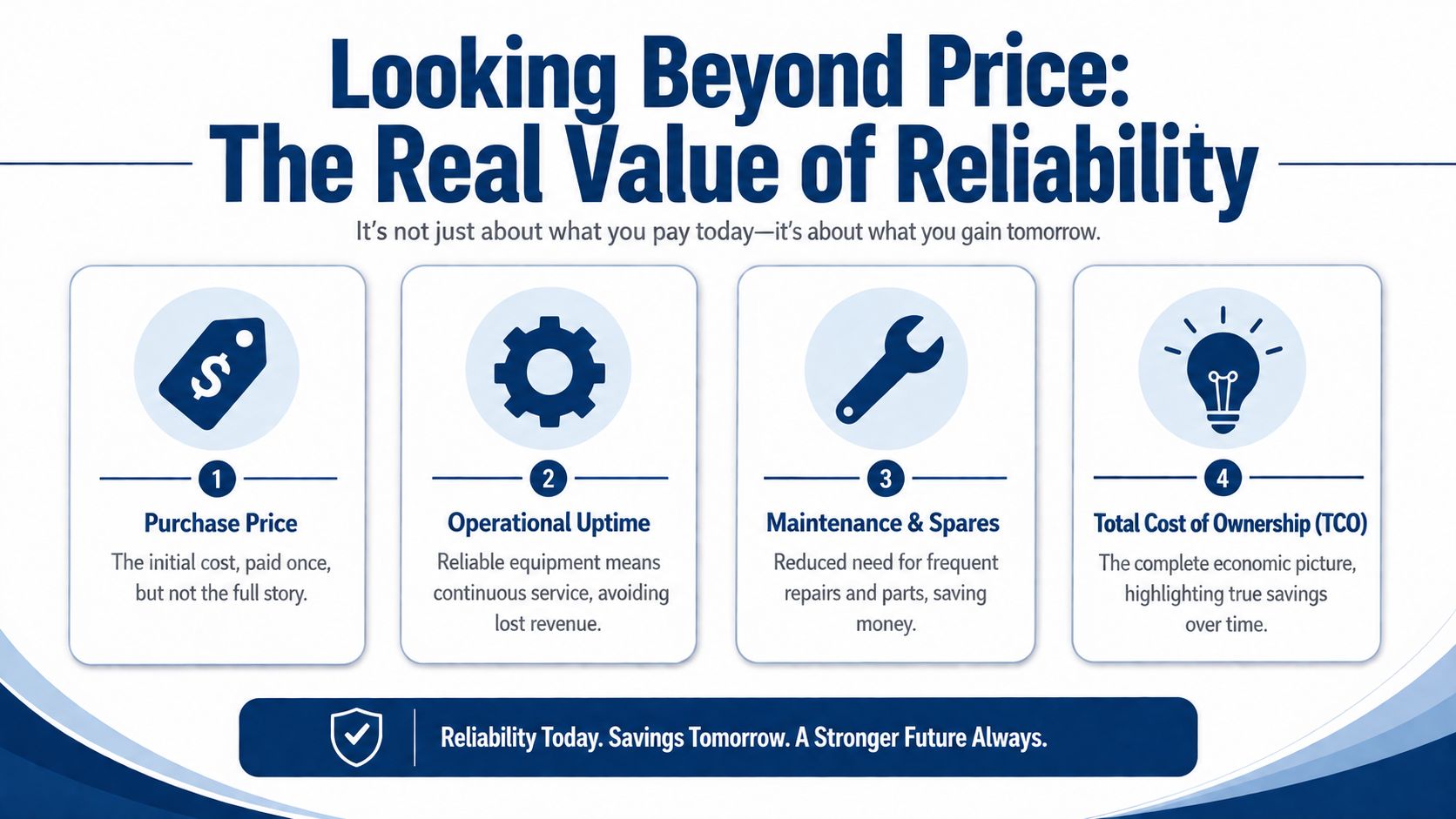
The cheapest purchase is rarely the cheapest piece of equipment to own. In hospitality, the true cost emerges later, through downtime, emergency call-outs, staff frustration, wasted product, and the headache of trying to keep service moving when a benchtop unit becomes unreliable. That's why total cost of ownership matters so much for NZ operators working in a tight-cost environment, where many businesses still report pressure from rising operating costs and weak demand (Petra Equipment).
A Roband unit is often judged on the opposite set of questions. Can it be cleaned easily? Can staff use it without a long briefing? Will the kitchen still be confident in it after months of constant cycling? Those are the questions that shape real operating cost, because the purchase price is paid once, but dependable performance is delivered every day.
In our experience working with hospitality businesses, the most expensive equipment is often the one that breaks down during peak service.
That's where reliability has hidden value. A well-chosen commercial brand reduces the pressure on the rest of the team because people aren't constantly checking, adjusting, or working around the machine. It also makes maintenance planning simpler, since commercial kitchens tend to run better when equipment is predictable and serviceable. If a business is comparing bench gear, it's smarter to ask what the unit costs over its working life than to focus only on the invoice.
For a related operational perspective, this guide on how reliable equipment protects your busiest trading days captures the same issue from a service-risk angle.
A useful comparison sits outside the kitchen too. The difference between a stable, repeatable process and a fiddly one is like the difference between a packed delivery run and a delayed one, the late stage is where small delays start to compound. That's why operational consistency matters so much, whether the equipment is on the counter or in the back of house. Even a sturdy pan like the Flonal Cookware Dura Induction Grill Pan 28cm makes sense in the same ownership conversation, because thick, durable construction is about long-term handling and repeated use, not just first impressions.
Built for the Demands of the New Zealand Counter Line
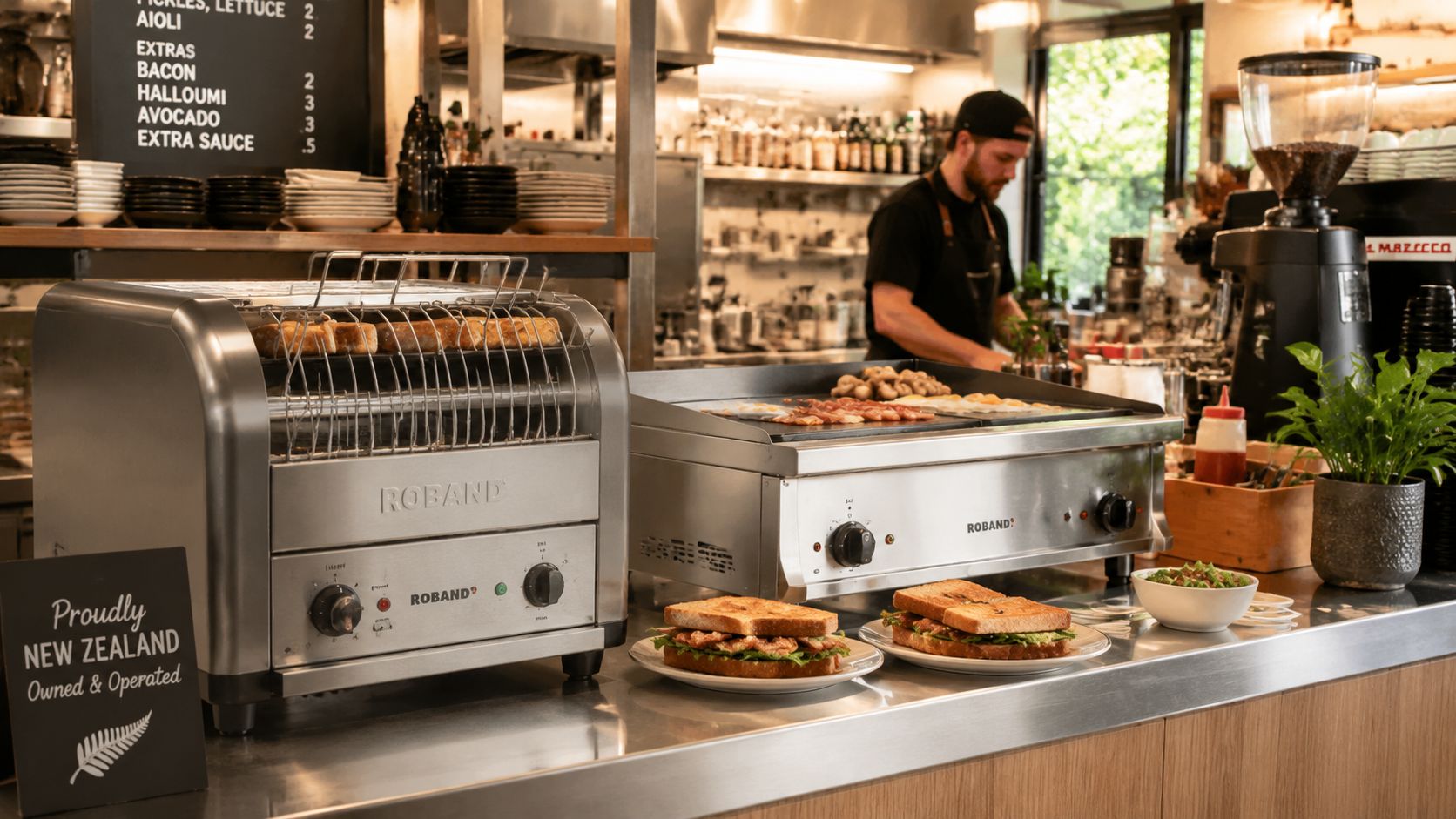
A lunch rush exposes the difference between equipment that looks good on the bench and equipment that holds up under pressure. Roband has earned its place in New Zealand kitchens because it is built for high-throughput counter-line service, where heat needs to stay steady, recovery needs to be fast, and staff need gear that behaves the same way every shift. In cafés and takeaways, the real test is whether the machine keeps food moving without forcing the team to stop, reset, or work around it.
The New Zealand product range includes heat lamps, bain maries, sandwich presses, and toasters, all set up for consistent holding temperatures and quick recovery between serves. In practice, that means less quality drift and fewer delays when orders stack up. It also means the equipment matches the work on the counter, which matters more than buying a unit with features a venue will never use.
A useful way to judge the range is by venue fit:
- Cafés and bakeries: fast, familiar presses and toasters support breakfast and lunch service.
- Takeaways: holding and recovery matter more than versatility.
- Hotels and carveries: warming and presentation equipment helps steady service.
- Caterers and institutions: durable counter-line gear suits repeated loading, holding, and cleaning.
That fit matters because staff do better with equipment they already understand. Familiar controls cut hesitation, shorten training, and reduce mistakes when casual staff step in or a team moves between sites. A unit that feels intuitive also helps protect consistency across shifts, which is where long-term value starts to show.
Counter-line design also has to sit within the rest of the bench setup. A warm side that is too slow, or a cold side that is awkward to reach, forces extra steps into service and those steps cost time every day. The same thinking applies to broader workflow planning, which is why a practical note like the guide to under-bench fridge placement and use is worth reading alongside counter equipment choices. Routelink's guide to last mile makes the same broader point in another setting, small process improvements repeated over time change the load on the whole operation.
How Small Efficiencies Create Significant Value Over Time
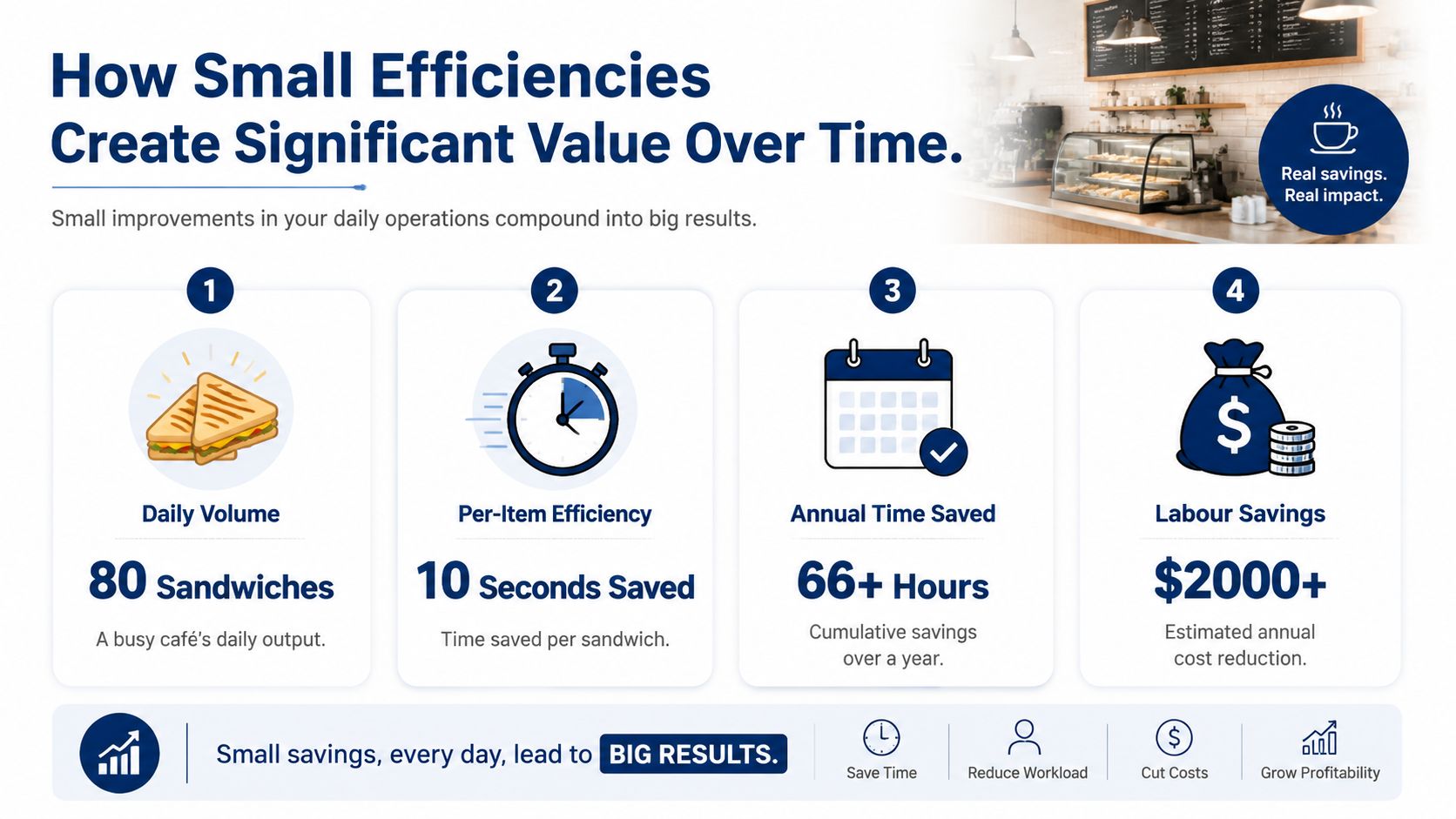
A reliability story becomes easier to understand when it's translated into time. Consider a busy café turning out 80 toasted sandwiches per day. If a piece of equipment, through simple controls and consistent heating, saves just 10 seconds per sandwich, that adds up to around 13 minutes per day, more than 80 labour hours per year, and about NZ$1,930 of labour value annually at New Zealand's adult minimum wage. This is an illustrative example designed to show how small workflow gains accumulate, not a measured Roband performance claim.
That's the invisible value many operators miss. A machine doesn't need to be dramatically faster to make a difference. It only needs to be consistent enough that staff aren't pausing to check the settings, repeat a cycle, or remake a product that drifted off standard. Over a long year, those saved seconds become real labour capacity.
For operators who want a wider operations lens, Routelink's guide to last mile delivery is useful because it makes the same broader point in another context, small process improvements repeated many times become meaningful. The principle is the same in a café kitchen, a breakfast service, or a takeaway line.
Small efficiencies repeated hundreds of times become significant over the life of the equipment.
This is also where staff familiarity becomes valuable in a very practical way. If the team already knows how to load, close, time, and clean the unit, there's less hesitation during busy periods. That reduces the chance of minor mistakes turning into slower service, which is often how hidden cost starts.
For operators interested in the staffing side of speed, the earlier note on the hidden cost of slow prep and how the right approach fixes it fits neatly with this idea of cumulative time savings.
The Strength of a Nationwide Service Network
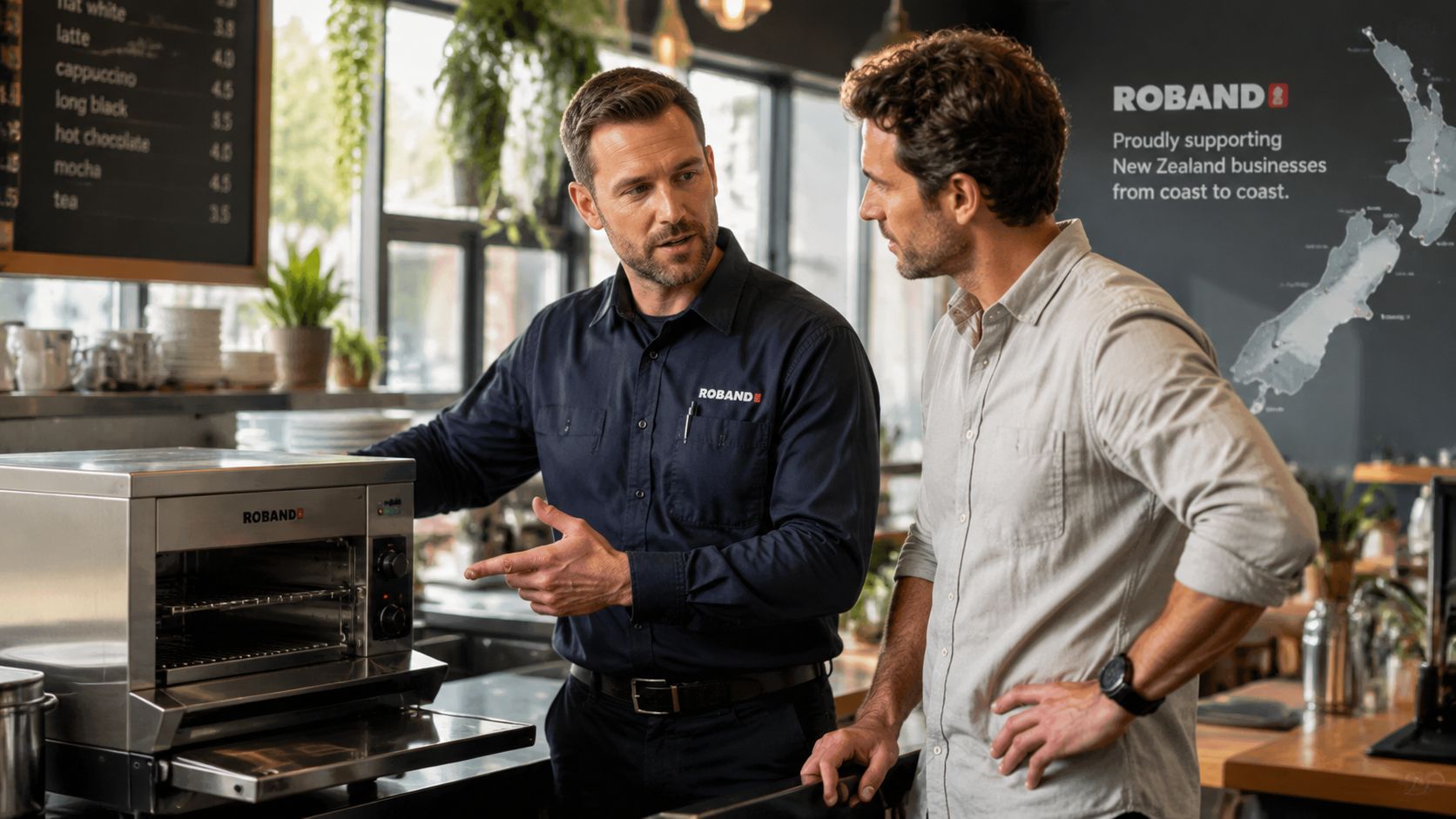
Buying commercial equipment also means buying into support. That's one of Roband's biggest strengths in New Zealand, because the brand has an established service presence and a long history in the market. Local market listings describe Roband as an Australian manufacturer whose counter-line products are renowned for quality and durability, with widespread regional availability that improves service-agent familiarity and spare-part accessibility.
That matters more than many buyers realise. When spare parts are easy to source and technicians already know the equipment, the path back to service is usually simpler. A kitchen under pressure doesn't need a mystery brand with a long diagnosis cycle. It needs equipment that a technician can recognise, assess, and get back into action with minimal delay.
For New Zealand operators, a key benefit is risk reduction. Established brands tend to fit better into normal maintenance routines, and staff are less likely to treat them as special-case machines. That means the venue can plan around the equipment instead of planning around its failures.
The support conversation is also where many hospitality businesses make their best long-term decision. They stop asking, “What is the lowest entry price?” and start asking, “What keeps the line running when something needs attention?” That shift is usually where a staple brand earns its place. The earlier note on our promise, trusted brands and full support sits neatly alongside that thinking.
Choosing the Right Roband Solution for Your Venue
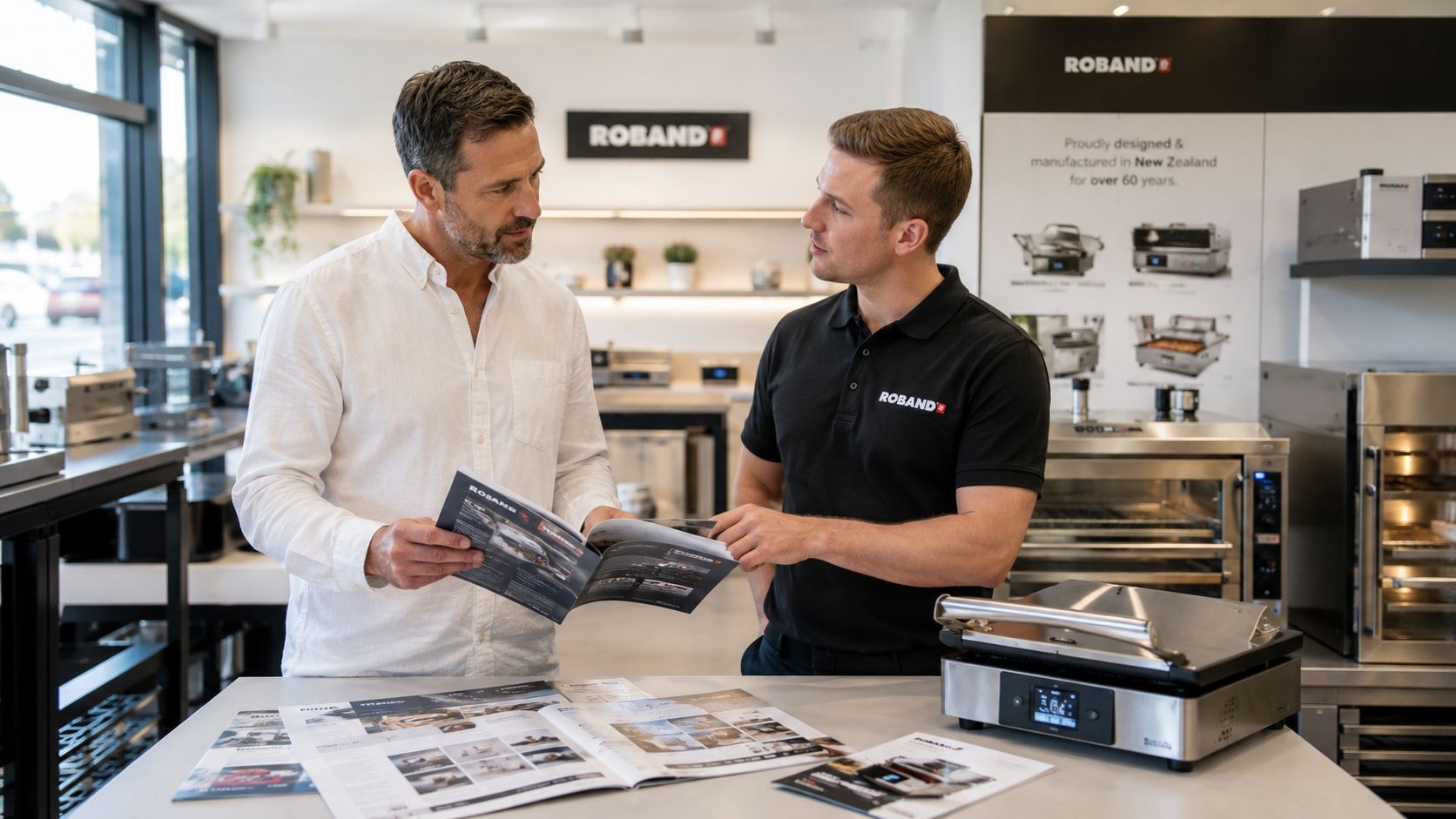
A good Roband decision starts on the floor, not in the brochure. A café running a steady toasted sandwich line needs different gear from a caterer holding plated food, or a hotel breakfast setup that has to keep service predictable. The right choice is the one that fits how the team operates, day after day.
A Roband 8 Slice Grill Station suits a café that needs repeatable output from a compact footprint. Bain maries suit service where holding temperature and timing matter more than speed. Heat lamps make sense in carvery-style service where presentation and temperature need to stay aligned for longer periods. The practical value is in having equipment that is durable, familiar, and ready for repeated use without constant babysitting.
For menu-led planning, a simple filter helps:
- High sandwich volume: choose a press or grill station with straightforward controls.
- Hot holding service: focus on warming and bain marie equipment.
- Front counter visibility: select gear that keeps service tidy and easy to monitor.
- Mixed staff experience: prioritise equipment that feels familiar from day one.
Training load is easy to overlook. Familiar equipment helps staff become productive more quickly, which matters in venues that rely on casual staff, new hires, or multi-skilled teams. Cleaning access matters too, because a machine that is awkward to wipe down or strip back can slow close-down and add friction to the end of service.
For businesses wanting a practical place to start, Simply Hospitality carries Roband within a broader commercial equipment range and can help match unit size, workload, and service expectations to the right setup. The same principle shows up outside the kitchen, where small details help achieve that hotel-quality feel, because familiar standards build confidence for guests and staff alike.
If a venue is weighing up Roband for a café, takeaway, hotel breakfast area, or catered service line, the choice should come back to menu, staff flow, and long-term support needs. Hospitality can help narrow the options on that basis, with advice that focuses on reliable day-to-day use rather than the cheapest purchase price.