

Why Victorinox Chef Knives Are Trusted by Professionals Worldwide
The most expensive knife in a kitchen isn't automatically the best professional knife. The more useful test is simpler: which knife does the team reach for when prep is heavy, hands are wet and service is moving quickly? In many commercial kitchens, that answer is Victorinox, because the knives are practical, comfortable, straightforward to maintain and available across a broad range of professional uses.
That reputation isn't built on a single premium feature. It comes from the working-life value of a tool that can be used repeatedly, sharpened, cleaned, stored safely and replaced without disrupting the whole kitchen. Victorinox has maintained a continuous brand legacy for 125 years, a history reinforced in New Zealand by broad local availability across chef-knife styles and professional price points. The New Zealand Knife Guide is useful context for operators comparing knife shapes, sizes and handling preferences.
The Knife Everyone Reaches For First
A professional knife earns its place through repetition. It needs to make ordinary work feel predictable, whether that work is chopping vegetables for a restaurant service, portioning proteins in a butchery, preparing trays for catering or producing meals in an institutional kitchen.
Victorinox's appeal sits in that practical middle ground. The knives are not positioned as delicate showpieces, and they don't require every cook to handle them like specialist instruments. Their lightweight construction, familiar European profiles and accessible replacement options suit teams where several people may use the same equipment across a shift.
Working rule: The best knife for a commercial kitchen is often the one staff can use confidently, maintain correctly and identify immediately.
The brand's local depth supports that working-tool reputation. A major New Zealand knife retailer lists 383 Victorinox kitchen-knife products in its brand category, while another national supplier lists common chef-knife sizes including 20 cm and 25 cm. Those listings show a range broad enough to support restaurants, caterers, butchers and food-service operations rather than a single specialist application. Victorinox kitchen knives in New Zealand can be assessed alongside the venue's existing knife requirements.
The question isn't whether Victorinox is more impressive than a forged premium knife. A heavier forged knife may offer a more substantial feel, and some chefs prefer that balance for demanding prep. The question is whether the additional weight, price and care requirements improve the work being done at a particular station.
For many teams, a practical Victorinox chef's knife becomes the common reference point. Staff learn the same handle shape, supervisors can organise sharpening around familiar blades, and replacements don't require a complete change in technique. That consistency matters more than prestige when the knife is used throughout the day.
What Victorinox Knives Are Actually Made Of
The construction explains much of the brand's practical character. Victorinox Swiss Classic chef's knives use sharp stainless-steel blades, straight or fluted edges and lightweight ergonomic handles. The manufacturer lists the 8-inch model at 7.9 inches of blade length and 5.6 oz, specifications that favour nimble handling during extended preparation. Victorinox's Swiss Classic chef's knife specifications provide the clearest reference for those details.
Fibrox models take a similarly practical approach. Victorinox identifies the range as Swiss made, with stainless-steel blades, a normal straight edge and a thermoplastic elastomer handle designed to provide control. The 8-inch Fibrox chef's knife lists a 7.9-inch blade and 6.4 oz weight, while the 10-inch version lists a 9.8-inch blade and 6.6 oz weight. Both are dishwasher safe according to the product information, although a commercial operator still needs to consider how dishwasher handling affects edge protection and storage. Victorinox Fibrox chef's knife information sets out those product specifications.
Victorinox Chef Knife Construction at a Glance
| Component | Fibrox Pro Line | Classic Line |
|---|---|---|
| Blade | Stainless steel, straight edge, practical stamped construction | Stainless steel, straight or fluted edge options |
| Handle | Textured TPE handle intended to support control | Lightweight ergonomic handle |
| Cleaning position | Product listings identify dishwasher-safe construction | Swiss Classic product information identifies a lightweight professional format |
| Handling priority | Grip security and low weight | Comfort, control and easy everyday use |
| Best fit | Wet prep benches, high-volume stations and general commercial work | General preparation where a light, predictable knife is preferred |
Construction choices create trade-offs. A lighter stamped knife can feel less substantial than a forged model, but that can be an advantage when a prep cook is making repeated cuts. A textured handle may look less refined than polished wood or smooth composite, yet it gives operators a more practical surface when hands are damp or greasy.
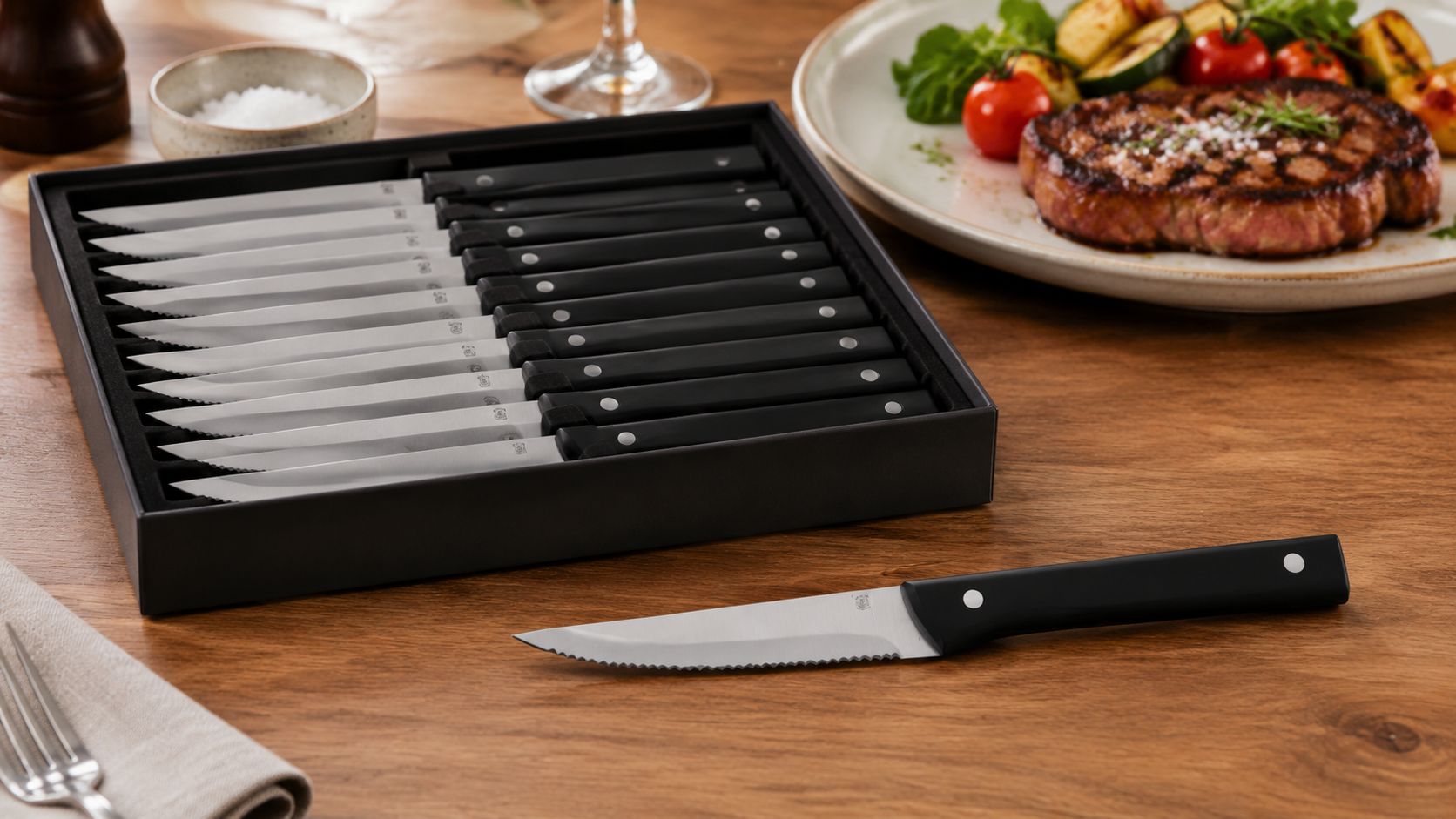
That distinction is similar to the difference between a chef's knife and a table knife. The Tablekraft Tempo Steak Knife 12 Pack uses purpose-shaped serrated blades for cutting grilled meat at the table, supplied as a 12-piece hospitality pack. It's a reminder that the right edge is determined by the job, not by whether the knife appears more premium.
Operators comparing handle feel and construction can also consider the practical differences discussed in why Wüsthof knives remain a benchmark for precision and craftsmanship. A forged knife may be the right choice for a cook who wants greater heft. Victorinox is often the better fit where low weight, grip and repeatable maintenance carry more operational value.
Edge Geometry, Weight and Balance in Daily Use
A chef's knife is a hand tool, so its specifications matter most through the wrist, fingers and cutting board. Victorinox's Swiss Classic model is listed at 5.6 oz, while the Fibrox 8-inch model is listed at 6.4 oz, according to the manufacturer's product information cited above. That light profile reduces the amount of mass a cook has to control through repeated chopping, slicing and dicing.
The benefit is most obvious during long prep runs. A cook making fine vegetable cuts may prefer a blade that changes direction easily rather than one that feels imposing. A longer Fibrox blade, listed at 9.8 inches, gives greater reach for large produce and proteins, but it also demands more bench space and more deliberate control.
What the edge profile changes
Victorinox chef's knives use a straight, normal edge rather than a serrated profile. That makes them suitable for general chopping, slicing and dicing, while the Fibrox collection is also described as designed to slice smoothly through tough cuts of meat. The Victorinox Fibrox collection supports the range's role as a versatile preparation line.
The blade profile suits common push-cutting and rocking motions, although no chef's knife is perfect for every technique. A cook who prefers a very flat Japanese-style profile may want a different shape for precise vegetable work. A cook who uses a rocking motion may prefer the familiar curve of a European chef's knife.
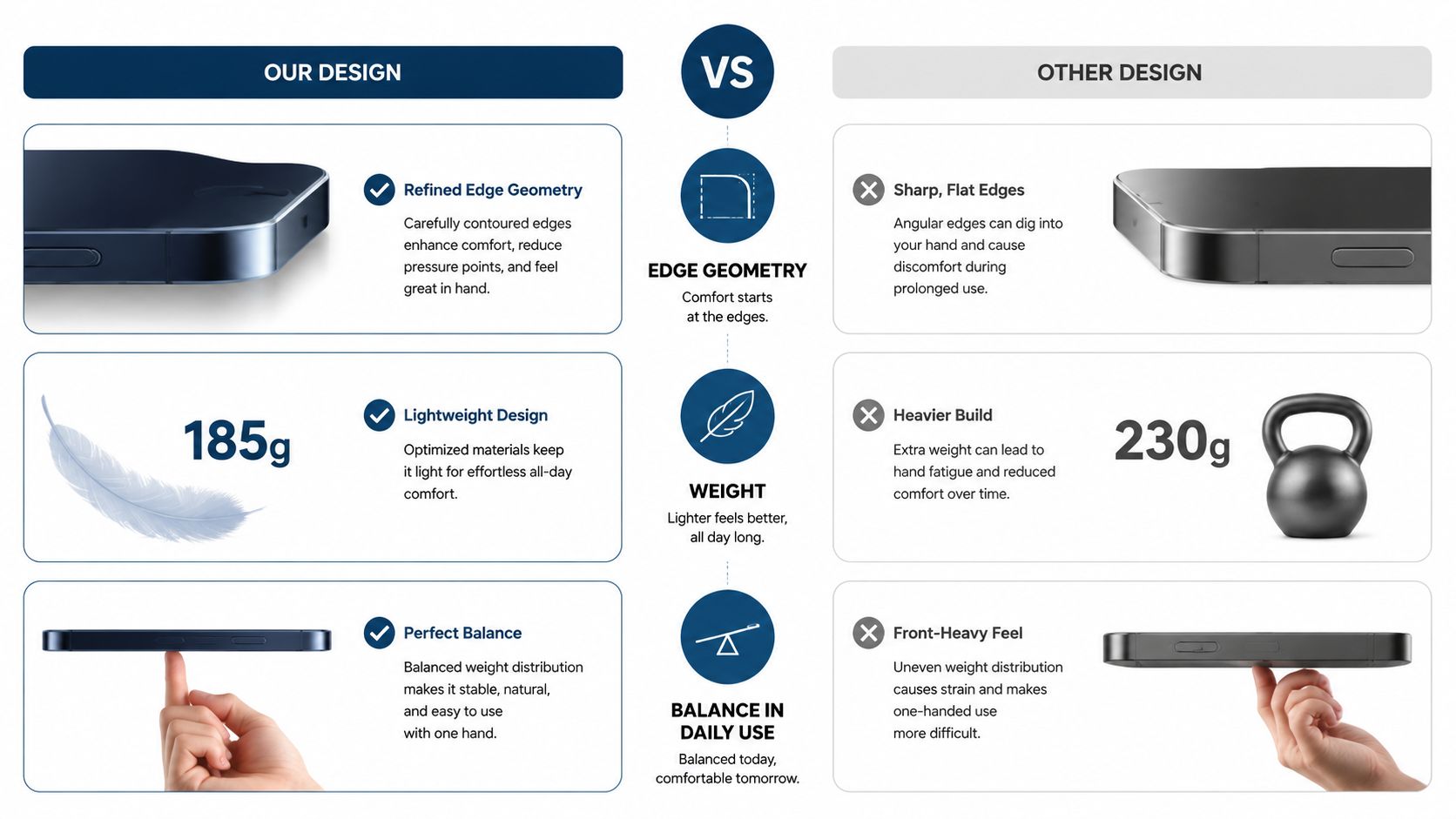
Balance also affects how a knife feels during repetitive work. A slightly forward working feel can help the blade move through ingredients, while a lighter handle reduces the sensation of dragging the knife through each cut. Those preferences vary between cooks, so a team shouldn't standardise a knife without checking whether the handle and weight suit the people using it.
The Global knives chef-favourite discussion provides a useful reminder that lightweight handling can appeal to professional users, but grip design remains personal. Victorinox's Fibrox handle is especially relevant where wet prep, fast handovers and mixed experience levels make a secure, uncomplicated grip more valuable than a highly individual feel.
Maintenance, Hygiene and Working-Life Value
Purchase price tells only part of the story. A commercial knife creates value when it remains comfortable, serviceable and appropriate for repeated work. If a blade becomes dull, the useful life may not be over. A maintainable knife can be sharpened, provided the edge hasn't been damaged through misuse, poor storage or unsuitable cutting surfaces.
Victorinox's stainless-steel construction and product listings that identify dishwasher-safe models make the range practical for busy kitchens, but dishwasher compatibility shouldn't be treated as permission to ignore knife care. Blades can strike other items, and rough handling can damage an edge even when the handle survives the wash cycle.
The costs operators actually feel
A kitchen manager should track more than the invoice. The useful questions are operational:
- Edge maintenance: Can staff sharpen the knife consistently, or does every dull blade need outside attention?
- Handle condition: Does the grip remain secure when the bench is wet, and can staff clean it properly?
- Replacement simplicity: Can the business source the same model when a knife is lost or damaged?
- Staff acceptance: Do cooks reach for the standard knife, or do they avoid it for particular tasks?
| Factor | Typical Budget Knife | Victorinox Chef Knife |
|---|---|---|
| Upfront decision | Often centred on the lowest purchase price | Usually assessed against everyday working value |
| Handling | May vary between models and batches | Product ranges provide familiar lightweight formats |
| Maintenance | Sharpening and cleaning quality still determine usefulness | Stainless construction and maintainable edges support repeated use |
| Replacement | Inconsistent shapes can complicate standardisation | Broad local availability supports like-for-like purchasing |
| Best assessment | Whether the knife is cheap to buy | Whether it remains useful, comfortable and manageable in service |
Cleaning routines should match the knife and the venue's workflow. Some teams choose hand washing and immediate drying to protect the edge, while others use approved commercial dishwashing processes with suitable separation and storage. Either way, knives shouldn't be left loose in sinks or thrown into drawers where staff can injure themselves and blades can strike hard objects.
Operators managing equipment identification across a larger operation may also find the principles in Australian surgical identification standards useful as a general prompt to think about clear identification and controlled equipment handling. Commercial kitchens don't need surgical labelling systems, but they do benefit from knowing which knife belongs to which station and how it should be maintained.
For sharpening, teams can use a suitable rod to realign an edge where appropriate, then use a whetstone or professional sharpening service when material must be removed. The knife sharpening stone guide is relevant for operators deciding whether sharpening should be handled in-house or assigned to a trained service provider.
Where Victorinox Knives Earn Their Reputation
The strongest argument for Victorinox appears in ordinary prep, not in a display cabinet. A restaurant garde manger station may need one chef's knife to move from leafy vegetables to herbs, garnish work and general mise en place. The value comes from predictable handling, a straight edge and a handle that remains manageable when the station is damp.
A catering production kitchen creates a different test. Staff may portion large batches, move between boards and containers, and hand tools between people with different levels of experience. A lightweight knife with a familiar profile reduces the need for each cook to adapt to a completely different balance.
Different stations, similar priorities
In a butchery or food preparation business, a chef's knife won't replace a boning knife, slicing knife or butcher knife. It can still handle general trimming, vegetable preparation and tasks around the main production flow. Specialist blades should do specialist work, because forcing a chef's knife through bones or hard frozen product risks damaging the edge and creating an avoidable safety problem.
Restaurants often benefit from a shared core knife because staff move between sections. Catering teams may value the same arrangement when knives are issued, washed, sharpened and returned through a central process. Institutional kitchens and accommodation foodservice operations may place even greater emphasis on simple training, clear storage and consistent replacement, especially when many workers use the same equipment.
A knife doesn't earn professional trust by looking impressive in a knife roll. It earns it by completing the next task without creating another problem.
Victorinox has maintained its long brand identity around practical use, and New Zealand listings describe that legacy through the company's 125-year continuity and emphasis on a pioneering spirit, honesty and regional roots. A New Zealand Victorinox brand listing also shows multiple chef-knife formats, including 200 mm black Fibrox, 200 mm rosewood and a forged 3-piece chef's set. That variety matters because professional kitchens don't all want the same weight, handle or presentation.
The right choice still depends on the station. A heavier forged knife may suit a cook who wants more authority through dense ingredients. Victorinox tends to earn its reputation where comfort, repeatability and straightforward upkeep matter more than a substantial feel.
Choosing the Right Knife Types for Your Kitchen
A coherent kitchen knife kit starts with the tasks staff perform most often. The chef's knife handles general chopping, slicing and dicing. A paring knife takes care of trimming, peeling and garnish work. Bread, boning, slicing, butcher and utility knives should be added when the menu or production process gives them a genuine role.
Core knives for shared use
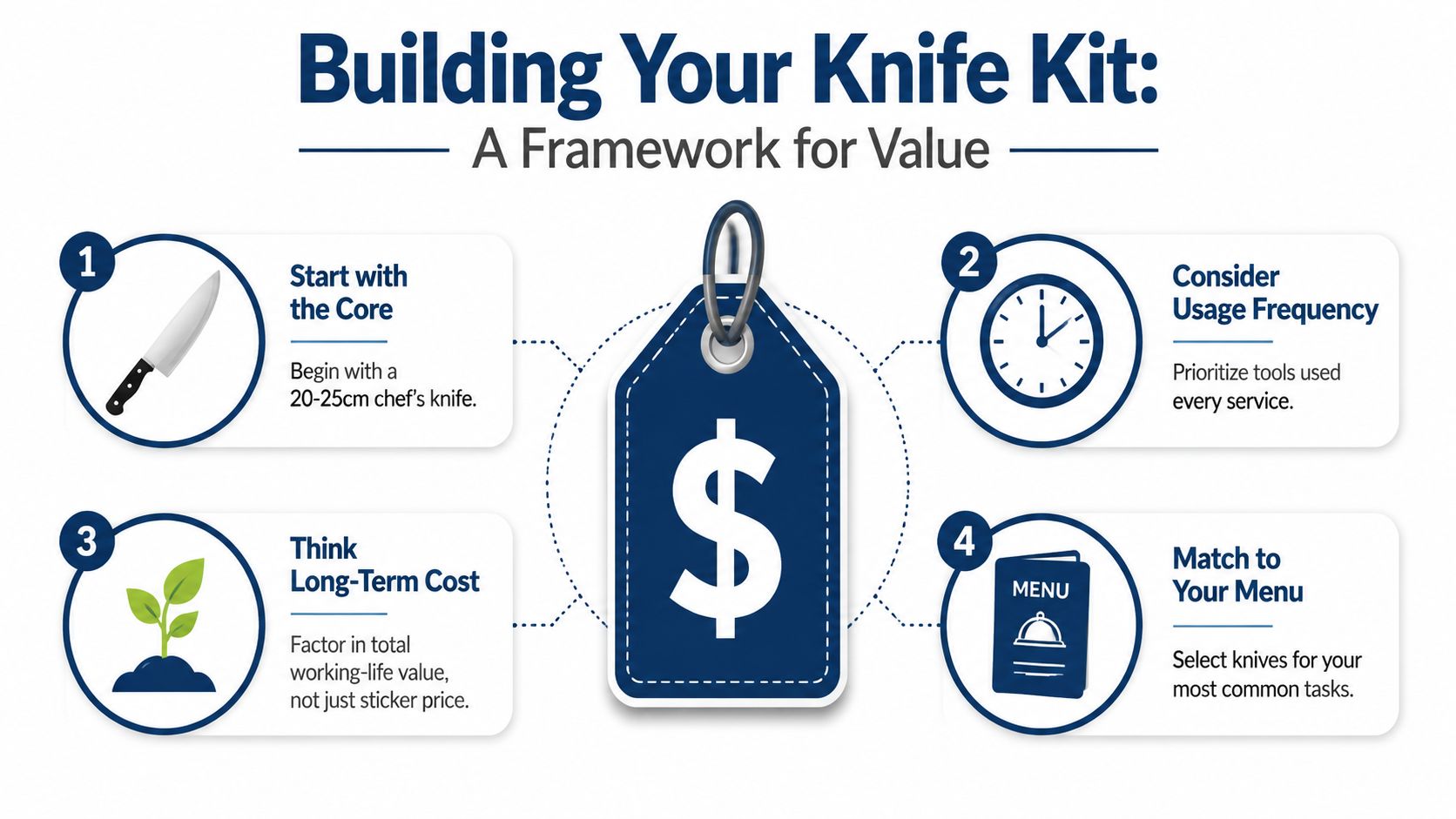
For many restaurants and catering kitchens, a 20 cm chef's knife is a practical central standard. The longer 25 cm format may suit large produce, proteins and production benches, while a shorter blade can be easier for compact prep areas or smaller hands. Victorinox's local product depth includes both professional sizes, which makes it easier to create a consistent core without forcing every station into the same specialist format.
A practical allocation might look like this:
- Chef's knife: General vegetables, herbs, meat preparation and mise en place.
- Paring knife: Peeling, trimming, small produce and detailed garnish work.
- Bread knife: Loaves, cakes and soft interiors where a serrated edge prevents crushing.
- Boning knife: Poultry, fish and trimming around bones, with flexibility selected for the task.
- Slicing knife: Roast meats, cured products and other preparations needing long, clean passes.
- Butcher knife: Production work where the blade shape and strength suit meat processing.
- Utility knife: Jobs too large for a paring knife but too small for a full chef's knife.
Standardising the common knives creates practical benefits. Staff develop muscle memory, supervisors can set one sharpening routine, and replacements are easier to issue. That doesn't mean every cook needs an identical collection. A pastry section may need a different bread knife, while a seafood operation may require flexible filleting and boning blades.
For operators reviewing a complete setup, the Knife Set NZ discussion can help frame the choice between buying a ready-made set and selecting individual knives around the menu. A set is convenient, but duplicates and missing specialists can reduce its value.
Kitchen layout also affects selection. Operators reviewing a new fit-out can use 360-degree images of Sysco facilities as a general visual reference for thinking about workflow, although knife selection still needs to follow the actual bench arrangement, storage location and production sequence.
Cutting Boards, Storage and Sharpening Basics
The cutting board can protect or destroy a good knife. Soft, food-safe plastic boards and suitable timber surfaces are generally kinder to an edge than glass, stone or ceramic. A quality knife used repeatedly on a hard surface will lose its useful edge sooner, regardless of brand.
Board management should be part of the kitchen's equipment plan. Separate boards by task where required, keep damaged surfaces out of service and replace boards when deep grooves prevent effective cleaning. Staff should also avoid using a chef's knife on packaging, metal trays or frozen product unless the blade is specifically designed for that work.
Storage needs a system
WorkSafe New Zealand advises cafés and restaurants to provide a magnetic strip for knife storage, supply handles appropriate to the job and train workers in safe knife use and storage. WorkSafe New Zealand's café and restaurant guidance makes clear that storage and staff competency belong in the same risk-control conversation.
A workable system can include:
- Service storage: A properly installed magnetic strip or knife rack that keeps blades visible and protected.
- Shift changeover: A secured knife caddy, blade guards or organised drawer system where knives aren't left loose.
- Production separation: Dedicated storage near butcher or prep areas, away from customer-facing zones.
- Training: A clear rule that knives are carried point-down, passed handle-first and never left submerged in a sink.
Sharpening and honing aren't interchangeable. Honing can realign an edge that has rolled during use, while sharpening removes material to create a new edge. The schedule depends on the knife, volume, board material and ingredients, so operators shouldn't promise a universal timetable.
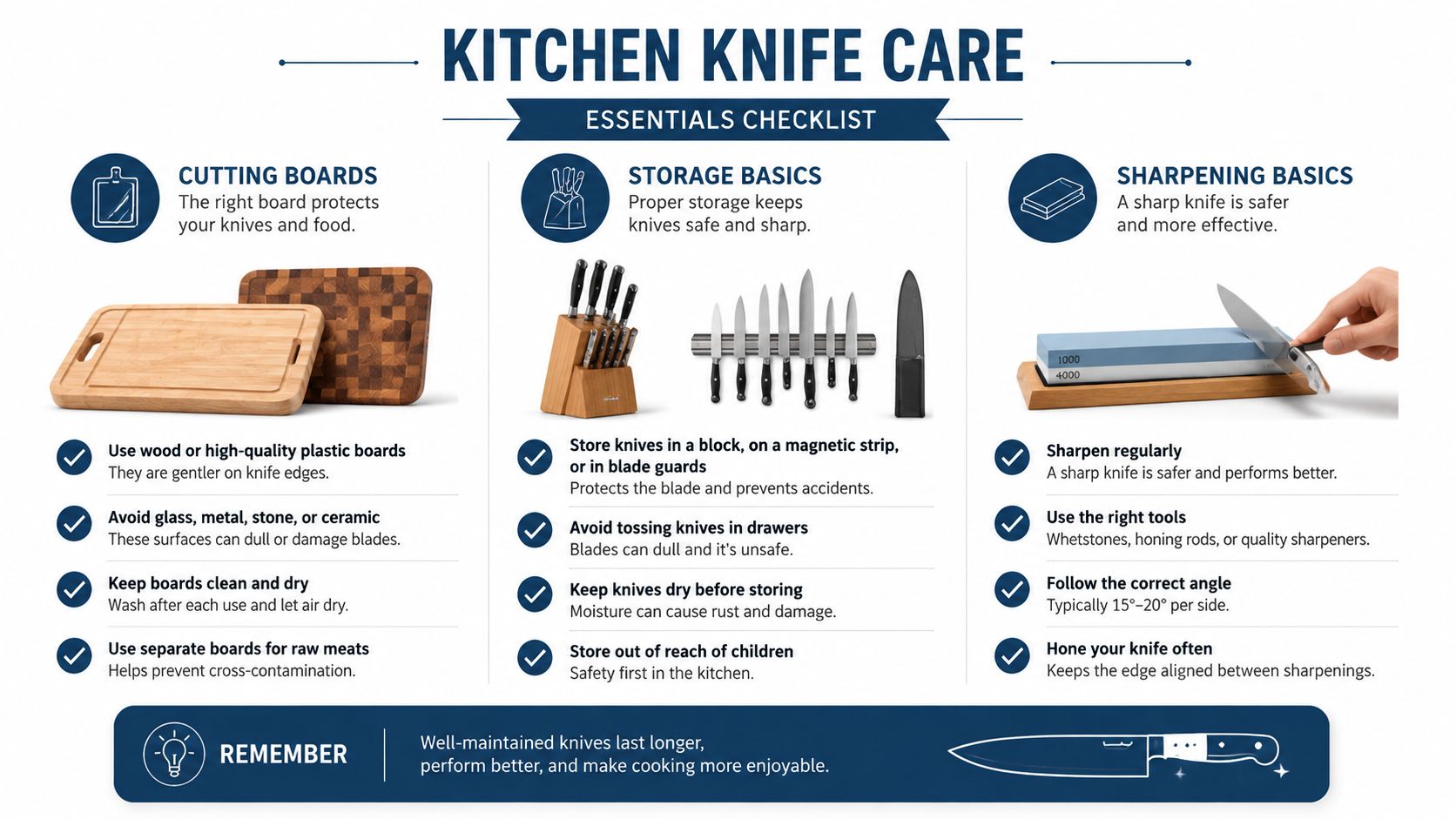
A ceramic or suitable steel rod may help maintain an edge between proper sharpenings, provided staff understand the correct technique. Whetstones offer control but require training. Pull-through sharpeners are convenient, yet an unsuitable device can remove more steel than necessary or create an inconsistent edge. Electric grinders are particularly unsuitable for casual use on thin kitchen blades because they can remove material aggressively.
The simplest operational test is whether the knife cuts cleanly without excessive force. If staff are pressing, sawing or changing grip to compensate for a blunt edge, the knife needs attention before it becomes a safety issue.
Putting It Together for Your Venue
A sensible Victorinox setup begins with the knives used most often, not the largest possible collection. Many venues can start with a 20 cm or 25 cm chef's knife, a suitable paring knife and a boning knife where meat or poultry preparation is part of the workflow. Bread, slicing, utility, filleting and butcher knives should follow the menu rather than fill gaps in a catalogue.
The strongest standardisation strategy is to make common knives consistent across the team. Staff then share the same handling expectations, supervisors can organise sharpening more easily and replacements don't introduce unfamiliar shapes into a busy station. Specialist knives remain available for tasks that genuinely need them.
Before ordering, operators should check:
- Staff fit: Whether the handle, weight and blade length suit the people using the knives.
- Workflow: Where knives will be stored, washed, sharpened and issued.
- Board compatibility: Whether cutting surfaces support the expected edge life.
- Menu demands: Whether the kitchen needs specialist blades for bread, fish, meat or pastry.
- Replacement planning: Whether the same model can be sourced when a knife is lost or damaged.
- Training: Whether staff understand cleaning, sharpening, carrying and storage procedures.
Working-life value also depends on the surrounding kitchen. A venue planning a broader renovation can review Restore My Kitchen ATX's kitchen remodel service as a general example of how equipment, work surfaces and layout are considered together. Knife performance can't be separated completely from the bench, board and storage system around it.
Hospitality operators can assess chef knives, specialist cutlery and related commercial kitchen requirements around their menu, staff and workflow. Visit Simply Hospitality to discuss a practical knife setup that supports everyday preparation rather than adding more items to the knife roll.