

Commercial Crockery NZ: A Practical Buying Guide
A Saturday service can expose a crockery mistake quickly. Plates queue beside a hot dishwasher, staff reach for whatever is available, and a chipped rim appears just as a busy table is being cleared. The right commercial crockery in New Zealand needs to look appropriate with the food, fit the menu, tolerate repeated handling and washing, and remain practical to replace when pieces leave service.
Hospitality sales reached NZ$15.7 billion in the year ended March 2024, with restaurants and cafés contributing NZ$7.8 billion, according to Restaurant Association hospitality data. That scale reflects a large working environment for plates, bowls, cups, platters and presentation pieces. Crockery is not merely decoration. It forms part of the service equipment, the wash-up workflow, the storage plan and the venue's food-safety controls.
Why Crockery Choice Matters More Than Most Operators Realise
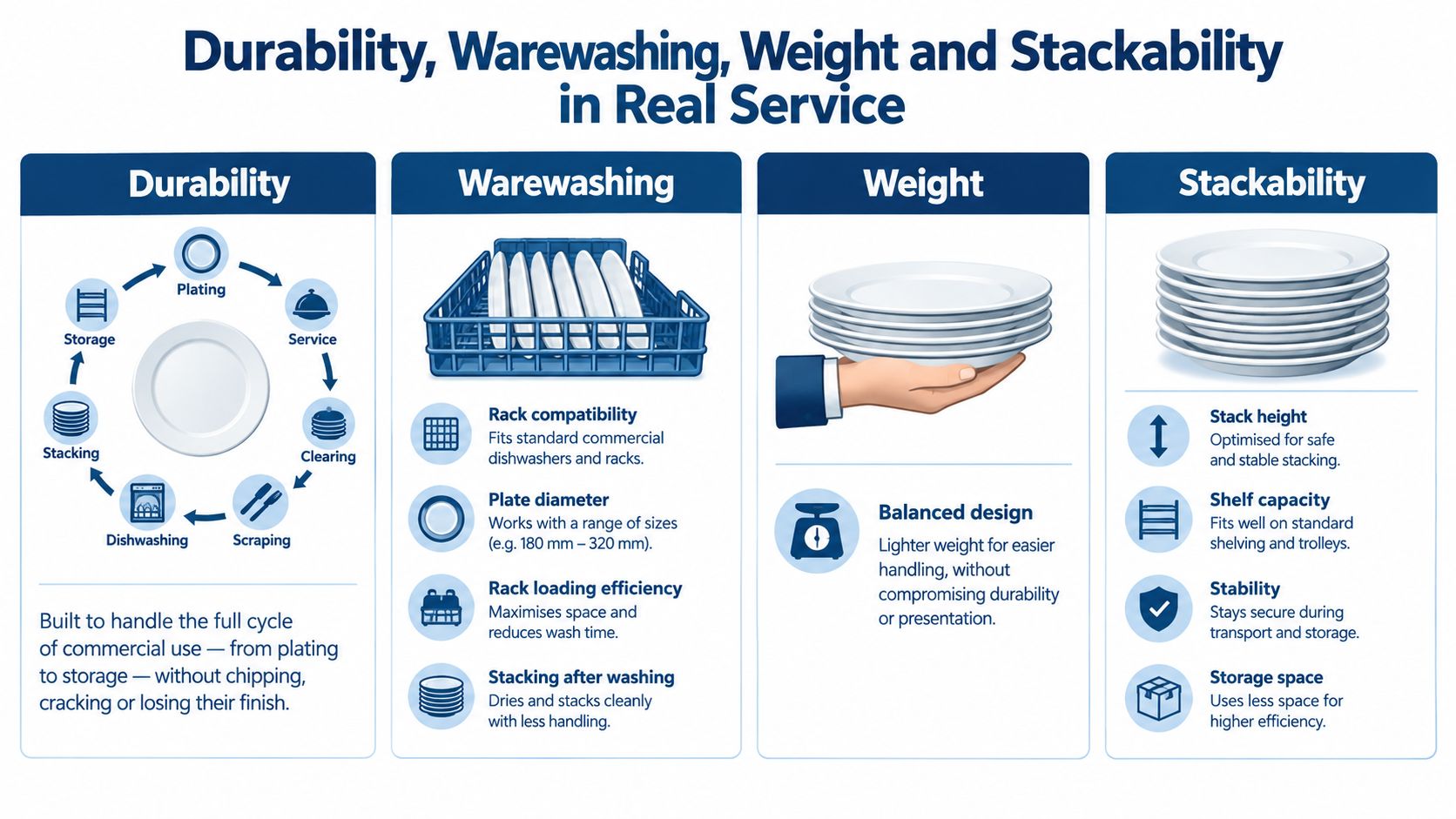
During a busy service, a plate moves through plating, service, clearing, scraping, dishwashing, stacking and storage before it is ready again. Each stage tests a different weakness. An oversized plate can cause rack-loading problems, an awkward bowl foot can waste shelf space, and a decorative finish can become harder to inspect after chipping or heavy wear.
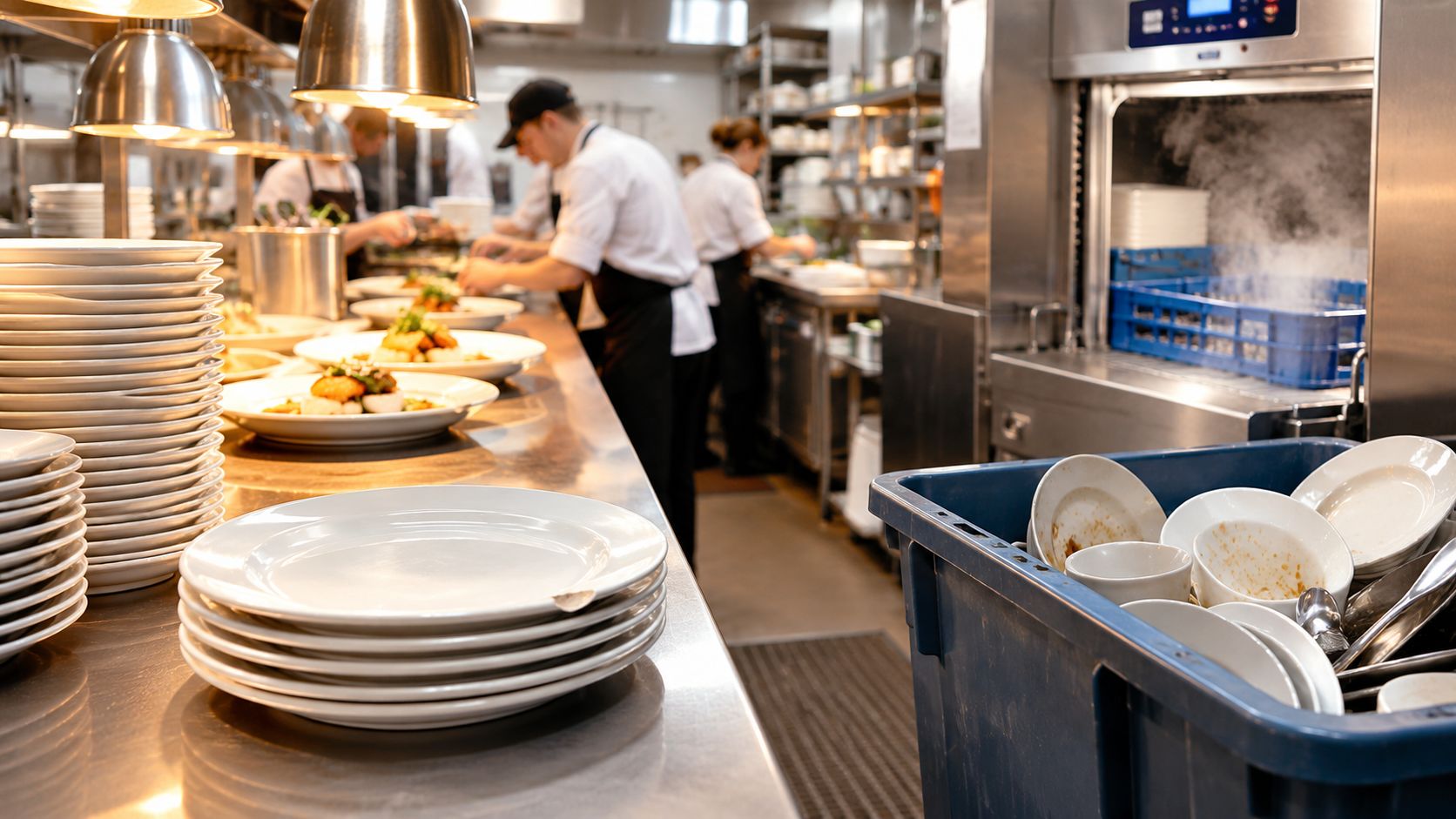
Good purchasing connects presentation with operation. A fine-dining venue may value a rimmed plate's profile and the way its surface frames a composed dish. A café may get greater value from a versatile plate that stacks neatly, handles breakfast and lunch, and fits its dishwasher racks. Hotels and caterers need consistent pieces in larger quantities, particularly when banqueting and rapid clearing put pressure on storage and replenishment.
The decision should cover the complete working life of every piece, from the pass to the wash-up area and back into service.
Practical rule: A plate that looks excellent on a sample table still needs to work in the rack, on the shelf, in a staff member's hands and through the replacement process.
Supply planning matters alongside performance. New Zealand imported NZ$201.968 million of ceramic products in 2024, according to Figure.NZ's recorded ceramic-product import data. For venues, that makes continuity, carton quantities, supplier communication and lead times practical purchasing questions rather than back-office details.
Operators should also assess the real cost of broken crockery in a restaurant, including sorting time, service disruption, mismatched replacements and the risk of leaving damaged pieces in circulation. Appearance and price matter, but the better choice is the range that remains workable through repeated handling, washing and replacement.
Start with the Menu Before You Choose a Plate
The purchasing sequence should be simple:
Menu → portion size → plating style → plate or bowl dimensions → service requirements.
Starting with a catalogue encourages the wrong questions. Operators begin with colour, shape or a dramatic rim, then try to make the menu fit the crockery. The menu should come first because each service style places different demands on surface area, depth, stacking and handling.
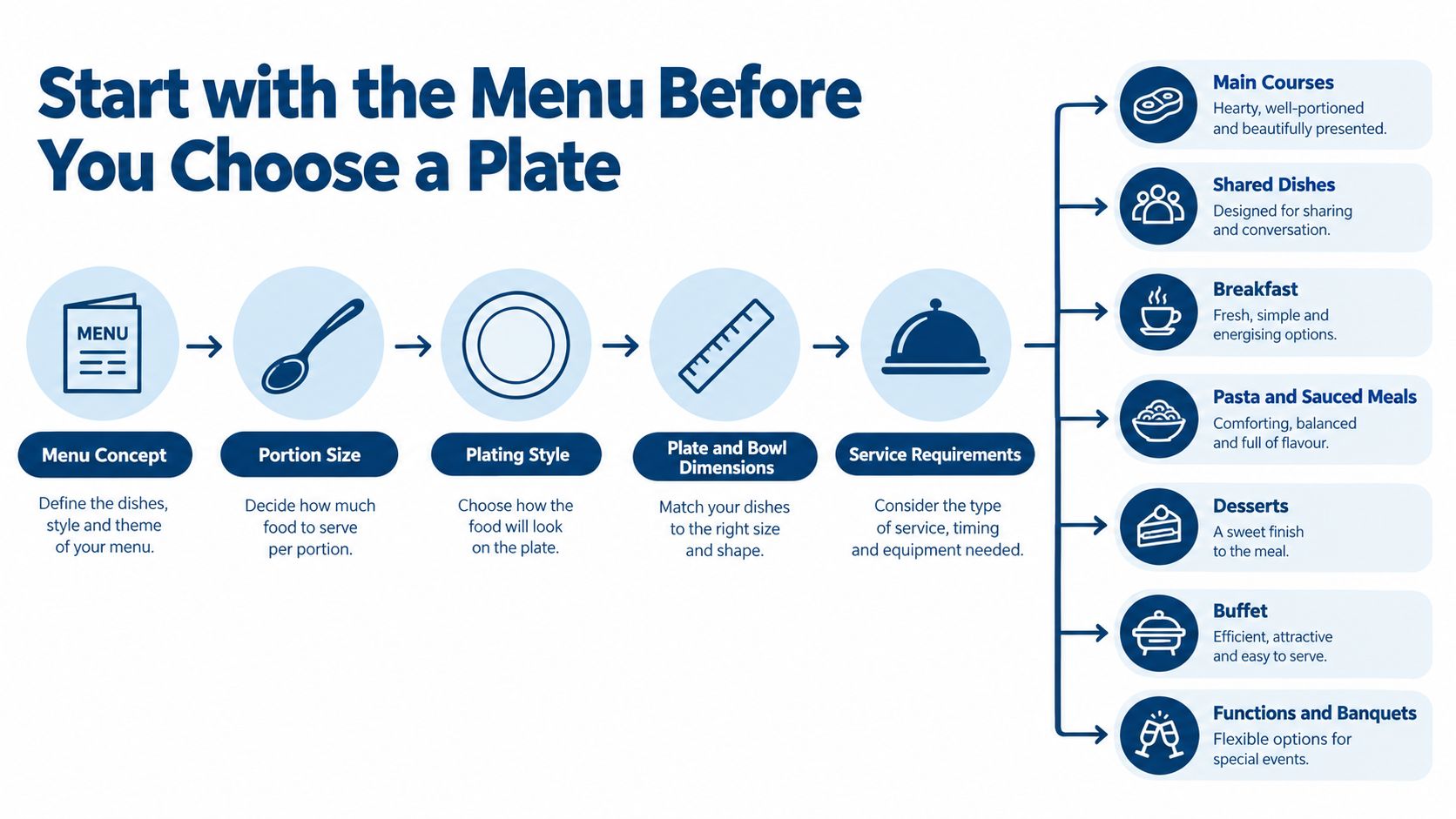
A main course with a composed protein, sauce and several garnishes may suit a coupe plate or a rimmed plate, depending on how much visual separation the kitchen needs. Pasta and sauced meals generally require more depth to contain liquid and reduce spills during service. Breakfast menus often benefit from versatile plates and bowls that handle eggs, toast, granola and lighter meals without creating a confusing collection of one-use pieces.
Shared dishes need a different assessment. A serving platter may look generous, but it also needs a safe carrying profile, suitable storage and a size that doesn't overwhelm the pass or dining table. Desserts may justify specialist presentation pieces when their shape naturally supports the menu, but a venue should question whether those pieces earn their storage space outside peak service.
Match the crockery to service conditions
Buffets and functions place greater emphasis on speed, consistency and replenishment. Pieces need to be easy for staff to handle, straightforward to stack and practical to wash in volume. A large plate can create visual impact, but it may also occupy more rack space, demand larger shelves and increase the effort required when staff carry several pieces at once.
Plate selection also connects with waste monitoring. Plate waste represents around 33% of the 24,375 tonnes of food waste generated annually by New Zealand cafés and restaurants, according to New Zealand food-waste guidance. Crockery isn't the only influence on waste, but a consistent plate format can help kitchens compare portions and observe returned food more clearly.
A practical review starts with the menu's busiest dishes, not its most photogenic dish. Operators should test whether each proposed plate supports the portion, protects sauces, fits the service route and returns through the wash area without slowing the team. Broader advice on restaurant equipment in New Zealand is useful when crockery decisions form part of a wider fit-out.
How Commercial Crockery Differs from Household Dinnerware
Household dinnerware is usually selected for domestic presentation, occasional entertaining and the available space in a home kitchen. Commercial crockery is selected for repeated service, frequent washing, staff handling, stock control and straightforward replacement. The difference isn't just a label on the box. It lies in the intended workload and the consequences of a poor fit.
Commercial ranges commonly include:
- Dinner plates: Main-course service, with dimensions and profiles chosen around the menu and stacking plan.
- Side plates: Bread, small dishes, breakfast accompaniments and lighter service.
- Bowls and pasta bowls: Breakfast, soups, desserts, pasta and sauced meals.
- Coupe and deep plates: Open presentation or more contained service, depending on the dish.
- Serving platters: Shared food, banquets, catering and buffet presentation.
- Cups and saucers: Coffee, tea, breakfast and formal table settings.
- Specialist pieces: Small presentation dishes, tasting formats and menu-specific serviceware.
A domestic plate may fit the food but fail the operational test. It may not stack securely, tolerate the venue's wash process or be available as an individual replacement once a collection has been discontinued. Commercial ranges are also commonly supplied in carton quantities suited to venue purchasing, so operators need to understand how many pieces arrive in each pack and whether that matches the stock plan.
The important distinction is that not every ceramic product is designed for demanding commercial use. Staff should assess the manufacturer's intended application, care instructions and supported features rather than assuming that a heavy or expensive plate is automatically suitable.
The full service chain exposes the difference. Household pieces might be washed and stored carefully by one person. In a venue, staff scrape plates quickly, load racks under pressure, unload while pieces are still being sorted, stack them repeatedly and move them between storage, pass and dining room. Crockery must be chosen for that system, not just for the first presentation.
Materials, Construction and What Vitrification Actually Means
Material affects the way crockery looks, feels, handles heat and wears in service. It doesn't provide a universal durability ranking. The same material category can contain products with different bodies, glazes, firing methods, shapes and manufacturer instructions.
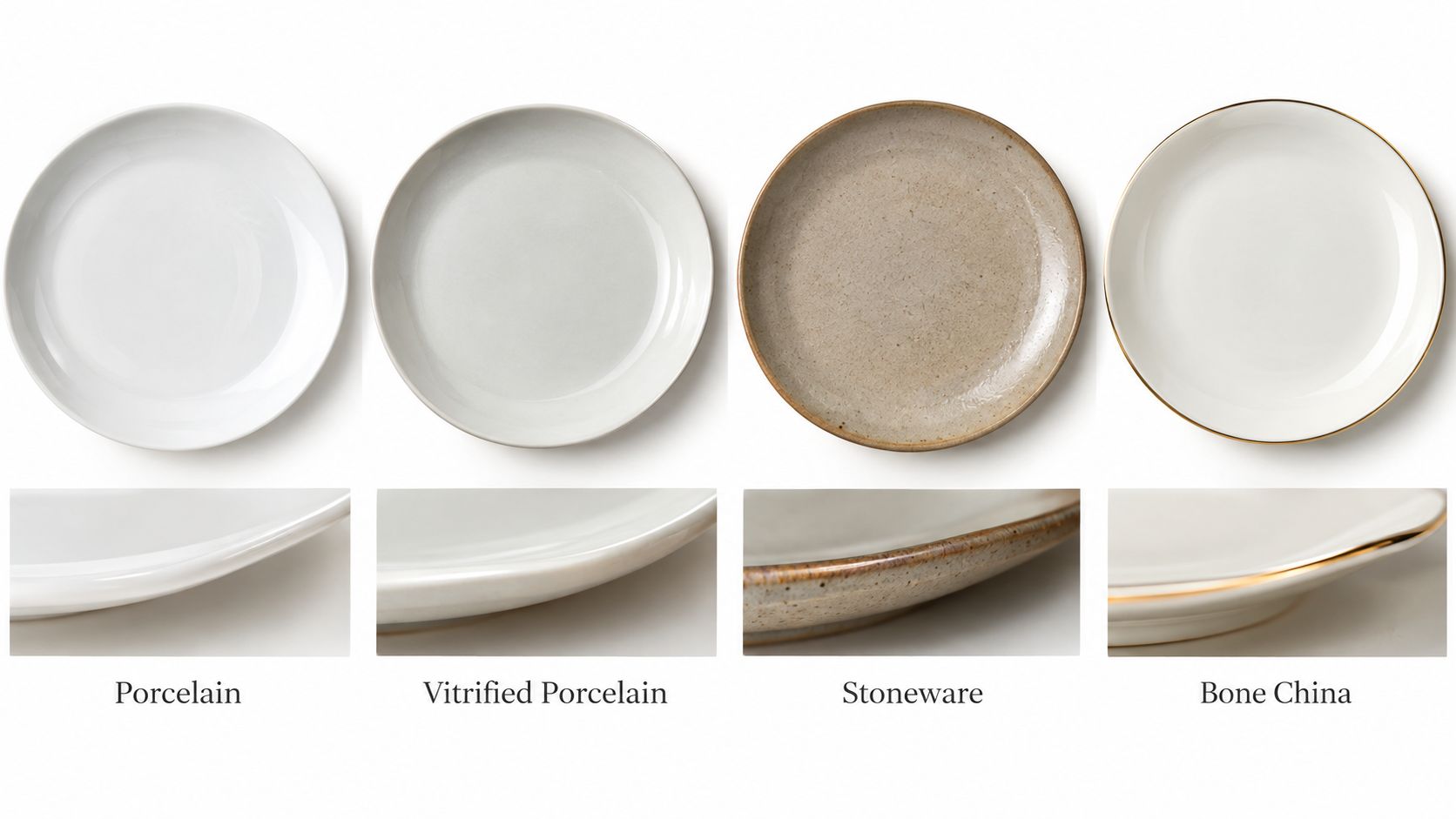
Porcelain is often associated with a smooth, refined appearance and a relatively light feel compared with some stoneware. It can suit restaurants, cafés and formal settings where a clean surface supports the food. The product specification still matters, particularly around dishwasher use, thermal shock and commercial application.
Vitrified porcelain has been fired so the ceramic body becomes highly dense and less porous. Vitrification refers to that change in the body, not a promise that every vitrified product has identical resistance to impact or thermal shock. Edge profile, glaze, thickness and construction remain important.
Stoneware often has a more substantial feel and a visibly earthy or handcrafted character. That can work well for casual dining, shared plates and menus where the crockery forms part of a relaxed visual identity. Its weight and shape need checking against staff handling, storage shelves and rack capacity.
Bone china is valued in settings where a delicate appearance and refined presentation are important. It may suit selected hotel, restaurant or formal service applications, but operators still need to confirm its intended commercial use and care requirements rather than relying on appearance alone.
Read the care instructions before ordering
A commercial dishwasher typically washes at approximately 55°C and uses a final rinse of at least 82°C for thermal disinfection, so crockery must be rated for repeated high-temperature washing to remain serviceable, as outlined in commercial dishwasher guidance. Operators should confirm dishwasher suitability for the exact product, not infer it from a broad material name.
The wash process also depends on correctly loaded racks, clear spray paths, appropriate detergent dosing and proper machine maintenance. A collection that handles the wash temperature but cannot be loaded efficiently may still create a poor operational result. For more on selecting practical tableware, the Dinnerware and Tableware resource provides a useful companion to product-level checks.
Shape, Presentation and the Look That Supports the Brand
Shape should make the food look deliberate without making the staff workflow awkward. Round plates remain versatile because they suit many table settings, stack predictably and work with a broad range of menus. Square and rectangular pieces can create a sharper contemporary look, but corners may require more shelf space and careful rack placement.
Rimmed and coupe plates produce different visual effects. A rimmed plate gives the kitchen a clear presentation boundary and can make sauces or garnishes feel contained. A coupe plate offers a broad uninterrupted surface, which can suit modern plating, but its usable centre and edge profile still need to match the portion and service style.
Bowls require the same discipline. Shallow bowls can present salads, desserts or smaller dishes attractively, while deeper bowls are more suitable where liquid or sauce needs containment. A bowl that is too deep for the menu can make food difficult to reach and may create awkward loading in the wash-up area.
Colour and finish should support the food rather than compete with it. White crockery gives strong contrast for many dishes and makes portions easy to assess. Coloured bodies, reactive-looking finishes and matte surfaces can reinforce a particular dining concept, but they may also make chips, scratches or staining harder to identify. Gloss finishes are often straightforward to wipe and inspect, while matte finishes should be assessed against the venue's cleaning process and the manufacturer's instructions.
Build the setting around the food
A cohesive table needn't use one brand for every item. Stanley Rogers cutlery can provide a different tactile and visual balance from the crockery, while Zwiesel and Pasabahce glassware can support the beverage service without forcing the venue into a single range.
The same principle applies to other table textiles. Operators comparing crockery with napery and table presentation may find it useful to compare durable hotel table linens when developing a consistent setting.
A design works when guests notice the food first, then recognise the venue's character through the details.
The practical test remains decisive. Staff should be able to carry the pieces securely, place them consistently, clear them without excessive scraping or stacking risk, and load them into the dishwasher without special treatment that slows service.
Durability, Warewashing, Weight and Stackability in Real Service
Commercial crockery doesn't need to be indestructible, and no responsible supplier should describe it as unbreakable. It needs to be appropriate for the handling pattern a venue can realistically control. Reinforced edges, commercial-use construction and thermal-shock features may be valuable where the manufacturer supports those claims, but they apply to specified products rather than every item in a range.
Test the wash-up before approving the range
A plate can look perfect on the table and still be a poor wash-up choice. Check:
- Rack fit: Confirm the diameter and foot profile work with the venue's existing racks.
- Loading density: Compare how many plates or bowls can sit securely in a rack without blocking spray.
- Bowl depth: Make sure deep bowls don't trap water or force inefficient loading.
- Drying and unloading: Assess whether staff can handle clean pieces without excessive re-sorting.
- Care instructions: Follow the manufacturer's washing, stacking and handling requirements.
Large or unusually shaped pieces can reduce the number of items in each rack. That may matter during a busy service when the wash area needs to turn clean crockery around quickly. The venue should test a sample through its actual machine, not just measure the dining table.
Weight creates another trade-off. A substantial plate may suit a premium presentation, but staff carrying several plates or clearing a large table will feel that extra mass. Heavier doesn't automatically mean more durable. The correct balance depends on the staff workflow, service style and the product's documented construction.
Treat storage as part of the purchase
Stackability affects more than shelf appearance. Operators should check:
- Stack height and the number of pieces per shelf.
- Stability when staff remove one piece from the middle or top.
- Accessibility during a rush.
- The number of different shapes competing for storage.
- Space reserved for replacements and seasonal serviceware.
A smaller, consistent range often makes stock control easier than a broad collection of specialist shapes. Buyers should also request food-contact documentation for decorated, imported or brightly glazed products. NZ guidance identifies AS/NZS 4371:1996 ceramic lead and cadmium leaching limits, including 0.8 mg/dm² for flatware such as plates, so supplier declarations or laboratory reports should cover the exact line, glaze and decoration as outlined in ceramic compliance guidance.
A practical wash-up assessment should sit beside the commercial dishwasher decision. Machine capacity, rack design and crockery dimensions must work together.
How Much Crockery to Buy and How to Plan Replacements
There isn't a universal number of plates per seat that suits every venue. Stock requirements depend on the relationship between seating capacity, peak covers, table turns, wash-up turnaround, service style and a realistic allowance for breakage or loss.
A useful planning equation is:
Seating capacity + peak covers + table turns + warewashing turnaround + service style + realistic breakage and loss allowance = starting stock requirement.
This is a planning framework, not a fixed purchasing formula. A venue with one concentrated service period may need a different stock position from a hotel serving breakfast, lunch, functions and room service. Main plates used across several services will generally need more stock than specialist platters used only for shared dishes.
Plan each piece separately
Operators should map the stock by use rather than applying one ratio to the whole range.
| Crockery group | Planning question |
|---|---|
| Main plates | How often do they return to the pass during the busiest service? |
| Side plates | Do breakfast, bread and shared service use the same piece? |
| Bowls | Are they used for several menu categories or only one dish? |
| Cups and saucers | Are coffee, tea and breakfast services overlapping? |
| Platters | Can they be washed, stored and transported without disrupting other work? |
| Specialist pieces | Do they earn their storage space outside selected menu items? |
Replacement planning starts before the first carton arrives. Ask whether individual pieces can be reordered, whether the colour and finish are likely to remain consistent, what carton quantities apply and how supplier availability and lead times could affect a future requirement. No crockery design can be promised as permanently available, so venues should retain product details, item codes and purchase records.
The whole-of-life equation is more useful than unit price:
Initial crockery cost + replacements + breakage and loss + warewashing practicality + storage and handling = whole-of-life value.
A premium range may justify a higher purchase price if its presentation and supported construction suit the venue. A lower-cost range may be the better choice when the service is fast, the setting is casual and replacement simplicity matters most. The answer depends on how the crockery performs across the complete operating cycle.
Bonna, Tablekraft and Choosing the Right Range for Your Venue
Bonna and Tablekraft are two commercial crockery options available through Simply Hospitality. Compare each collection against the work it must do, from plating and table presentation through repeated wash cycles, storage and eventual replacement. Bonna Patera and other stocked Bonna collections offer different shapes, finishes and matching pieces. The useful question is whether a specific collection fits the menu, service style, wash-up area and replenishment plan.
Tablekraft ranges also require a product-by-product review. Check material, plate and bowl formats, dimensions, finish, intended application and manufacturer-supported features. A collection suited to a café breakfast and lunch service may perform differently in a formal restaurant or high-volume banquet operation. Before standardising a range, confirm dishwasher suitability, carton quantities, matching pieces, current stock and expected lead times with the supplier.
Because commercial ranges are commonly imported, availability can affect a fit-out or later replacement. Record item codes, product details and purchase history, and confirm whether individual pieces can be reordered. A colour or finish may change between supply runs, so continuity deserves attention before the same range is specified across several service areas.
Match the range to the venue
- Cafés: Prioritise versatile plates and bowls, manageable stock, easy handling and formats that cover breakfast and lunch without filling shelves with specialist pieces.
- Restaurants: Choose menu-specific shapes and a consistent visual language, then test the range against dishwasher capacity, storage space and service handling.
- Hotels: Plan for quantity, banquet service, stacking, replenishment and warewashing across different meal periods.
- Aged care and healthcare: Give priority to practical handling, clear portion presentation, inspectable surfaces and cleaning requirements staff can follow consistently.
- Caterers: Assess transport, stacking, versatility, event setup and the ability to replace missing or damaged pieces without rebuilding the entire setting.
The table setting can combine crockery with Stanley Rogers cutlery, Zwiesel or Pasabahce glassware and other current ranges when proportions, finishes and service functions work together. Consistency across brands matters less than a setting that supports the menu and remains manageable during service, washing and storage.
For operators comparing Bonna, Tablekraft and other commercial crockery collections, Simply Hospitality can help assess dimensions, materials, pack quantities, dishwasher suitability, matching pieces and venue requirements. Its product review, Why Tablekraft Remains a Trusted Choice for Hospitality Tableware, provides further context on Tablekraft for hospitality use.
Simply Hospitality supplies commercial crockery, bowls, serving platters and dinnerware collections for cafés, restaurants, hotels, caterers, aged-care facilities and institutional kitchens. Visit Simply Hospitality to compare suitable ranges and contact the team about presentation, warewashing, storage and replacement requirements.