

Commercial Soft Serve Machine Auckland
A warm Saturday in Auckland can expose a soft-serve machine faster than any specification sheet. A queue forms at a dairy, café, food court stall, hotel or event site, the hopper level drops, and a machine chosen around average daily sales struggles through the busiest service. Later, tired staff still need to clean it properly before closing.
That's the central buying test for a commercial soft serve machine in Auckland. The equipment must survive concentrated summer demand and remain practical enough to dismantle, wash and sanitise after service. New Zealand has a long-established ice-cream market, with ice cream recorded as 0.41% of the CPI basket and 2.29% of the food group in the 2010-era pricing mix in a historical review by Statistics New Zealand. The opportunity is real, but the machine still has to match the venue, menu, site and staff workflow.
What Auckland Operators Actually Need From a Soft Serve Machine
A soft-serve machine has two jobs every day. It has to produce enough product during the peak rush, then be realistic to clean when the rush is over.
For Auckland operators, that usually means planning around warm weekends, school holidays, waterfront foot traffic, food-court surges and event service. A machine that performs comfortably during quiet trade can become a bottleneck when orders arrive together. Recovery matters just as much as headline production capacity, because the cylinder needs to return to serving temperature after repeated draws.
Practical rule: Size the machine around the busiest service period, not the average day.
The second job is less exciting, but more important for long-term ownership. Staff need to access product-contact parts, complete the required wash cycle, sanitise surfaces and reassemble the machine without guesswork. Commercial soft-serve guidance commonly recommends daily cleaning and sanitising, including draining, washing, disassembling removable parts and sanitising food-contact surfaces.
The venue changes the answer
A small café may value a compact benchtop unit and straightforward single-flavour service. A dessert shop, takeaway or high-volume event operator may need twin cylinders, stronger recovery and greater mix capacity. Hotels and restaurants often need a machine that supports several menu applications, such as plated desserts, cones, cups or frozen yoghurt, without making the closing routine unmanageable.
Auckland is also a sensible service base for this equipment. Industry commentary identifies Auckland as the largest single New Zealand market for refrigeration technicians, while an Auckland supplier describes nationwide delivery, installation and servicing from Onehunga in its local equipment guidance. That concentration supports access to refrigeration knowledge, parts and technical assistance.
The right choice starts with a written peak-demand estimate, a site check and a cleaning demonstration. Product styling comes after those three decisions.
Single, Twin and Twist Configurations Explained
The configuration on a quote tells operators how the machine will behave during service. It also determines bench space, mix handling, training and cleaning complexity.
A single-flavour benchtop machine suits a focused menu and a site with limited room. It keeps the operation simple, but it gives the venue no second flavour and no separate cylinder if the machine needs attention. A twin machine has two independent sides, allowing two flavours to run at the same time. A twist model combines both sides into a swirl, which can add visual appeal at tourist, waterfront and family-focused venues.
Floor-standing equipment generally offers more hopper and cylinder capacity than a compact benchtop unit. It can suit shops, food courts, hotels, events and busy takeaway sites, but it takes more floor space and may bring higher power, ventilation and servicing requirements.
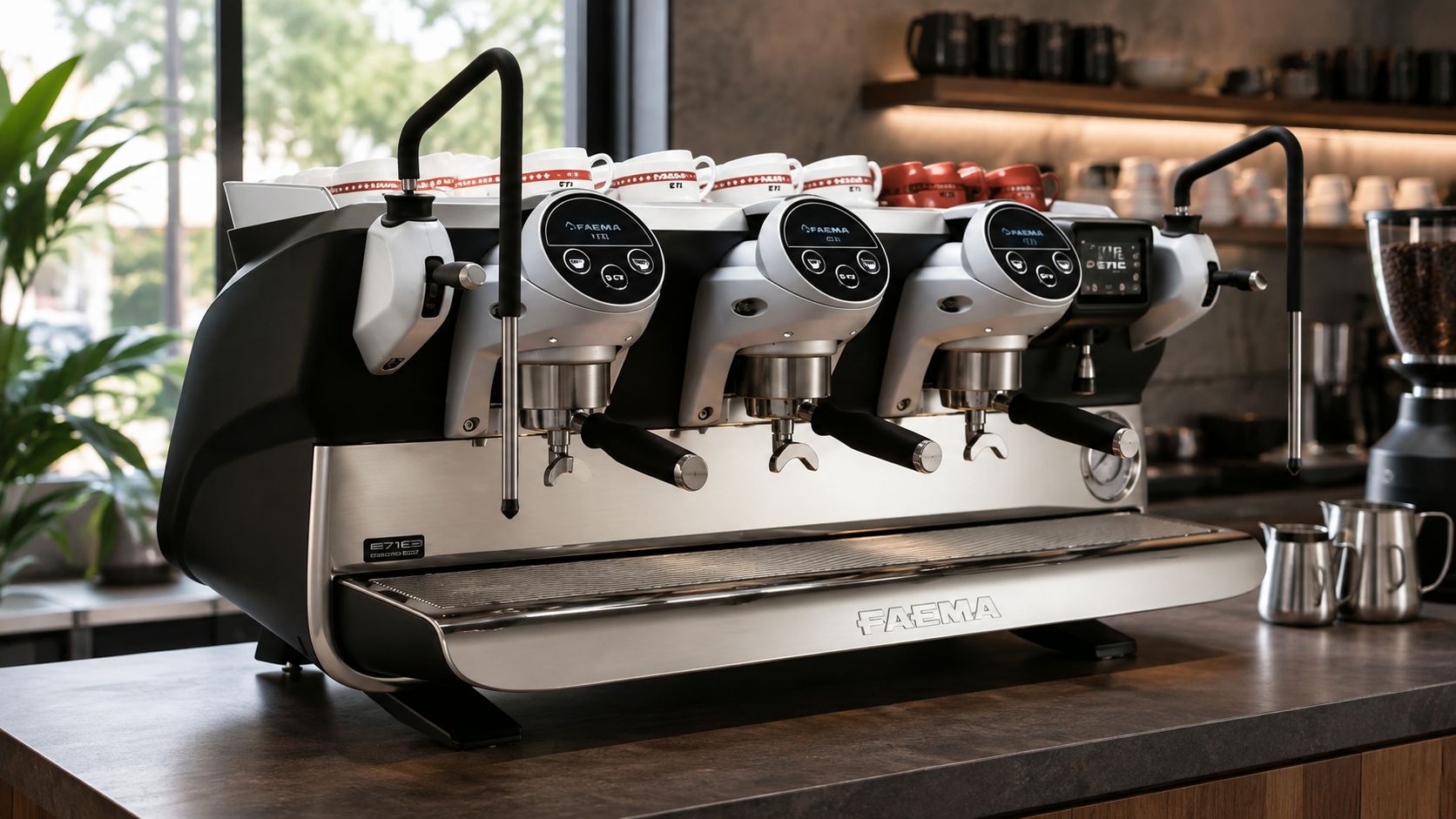
The unrelated placement of a coffee machine in a service area still illustrates an important planning point. A Faema E71E Commercial Espresso Machine uses independent boilers, group-specific temperature control, GTi infusion management and long cold-touch steam wands, features designed around a demanding bar workflow. Soft-serve equipment should be assessed with the same operational discipline, not selected by appearance alone.
| Configuration | Typical Use | Bench Space | Flavour Options |
|---|---|---|---|
| Single benchtop | Small cafés and focused menus | Low | One flavour |
| Twin benchtop | Cafés and dessert counters with broader choice | Moderate | Two flavours |
| Twin twist | Tourist venues, takeaway and family service | Moderate to high | Two flavours plus twist |
| Floor-standing twin or twist | High-volume shops, hotels and events | High | Two flavours, with twist on suitable models |
A common mistake is over-specifying a twist machine when customers mainly want one reliable flavour. Under-specifying is more costly when the venue expects two flavours, seasonal changes or frozen yoghurt. Operators comparing product categories should also distinguish soft serve from other formats using this comparison of soft serve, gelato, frozen yoghurt and acai.
Sizing a Machine for Peak Summer Demand
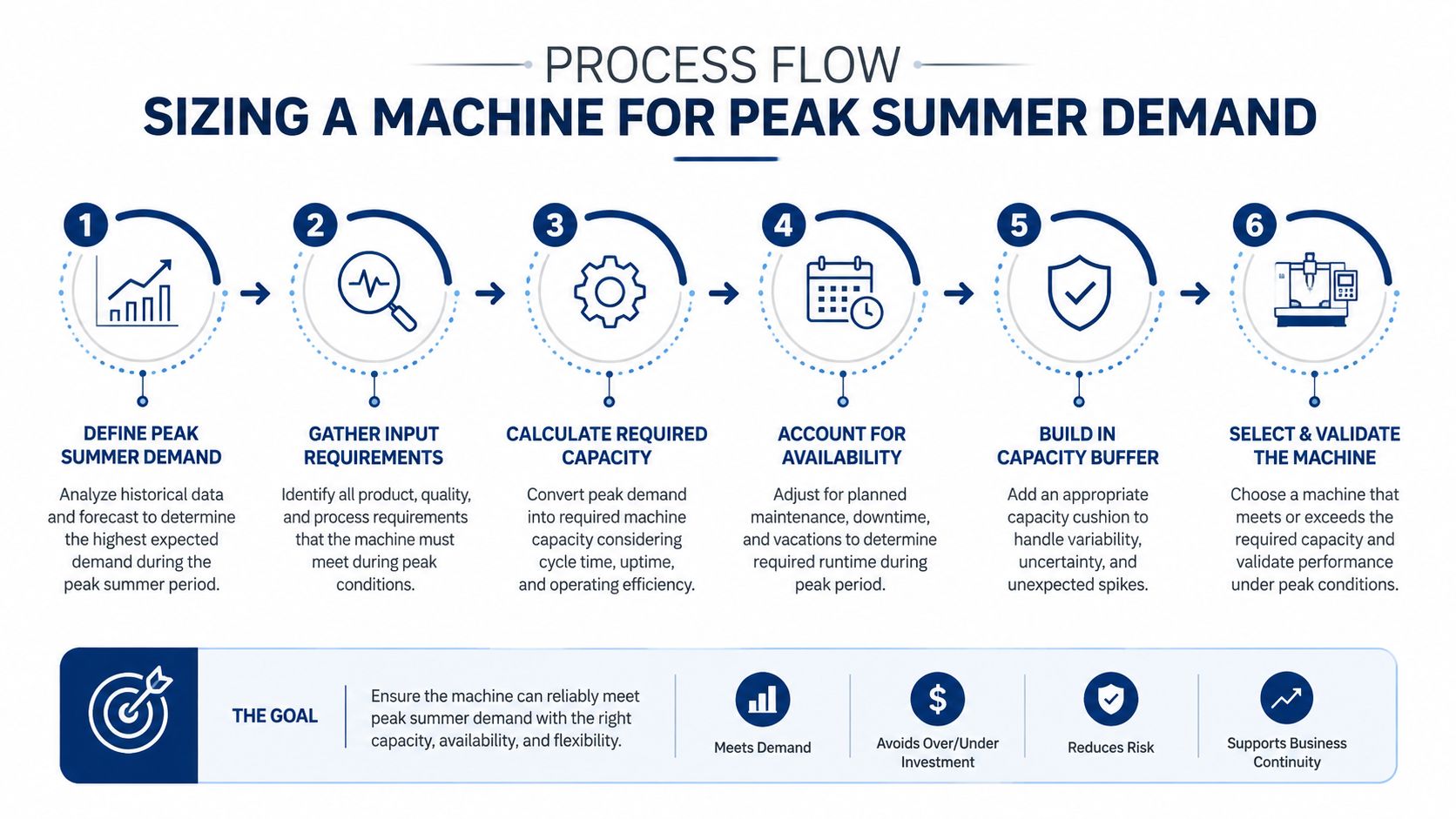
The important figures on a specification sheet are rated production capacity and recovery performance. Production may be expressed as cones or litres per hour, while recovery describes how quickly the freezing cylinder returns to serving temperature after product has been drawn.
Daily averages hide the problem. A venue may sell modestly through most of the week, then face a concentrated burst during a warm weekend, event or holiday period. The machine needs enough headroom to keep serving through that burst, not merely enough capacity to match the daily average.
Use this sizing method:
- Count expected serves during the busiest hour.
- Convert serves into the relevant portion or mix volume.
- Add reasonable capacity for demand spikes.
- Compare the result with the manufacturer's rated hourly output.
- Check recovery after repeated dispensing.
- Confirm hopper and cylinder capacity against delivery and refill routines.
The operating target is:
Serves required during the busiest hour + appropriate capacity for demand spikes
Read capacity in context
Gravity-fed machines can support a lighter, more aerated product, while pressure-fed systems can support faster output and a denser serve. The best choice depends on the desired texture, menu and service speed. Hopper volume also affects staff workload. A larger hopper can reduce refilling during service, but it may increase cleaning volume and require more careful stock rotation.
Ambient heat, the temperature of delivered mix and product density can all affect real-world performance. Published output should therefore be treated as a reference ceiling, not a promise that every venue will achieve the same result.
A single machine won't be universally best for Auckland's summer rush. The decision should combine hourly demand, flavour configuration, mix capacity, recovery, available power, bench or floor layout, cleaning requirements and local servicing. A machine adequate for average trade can become the queue's slowest point when demand arrives in a short burst.
Site, Power and Mix Compatibility
A soft-serve machine should never arrive before the site has been checked. The installation plan needs to cover power, ventilation, clearance, drainage, mix storage and staff access.
Larger machines may require three-phase supply. New Zealand commercial electrical guidance commonly describes three-phase supply as 400 to 415V at 50Hz, and commercial electrical information for high-load hospitality sites notes that many commercial kitchens need three-phase power. The exact machine specification must be confirmed before delivery, because a power upgrade can affect timing, cost and building approvals.
Benchtop equipment may use single-phase power, but the outlet still needs to suit the machine's stated load. Sharing a circuit with an oven, dishwasher or espresso equipment can create avoidable operational problems. The electrician should confirm the dedicated circuit and isolation arrangement during the site survey.
Leave the machine room to breathe
Refrigeration equipment rejects heat. A unit pushed tightly into an enclosed cabinet can struggle to move air, particularly in a warm service area. Ventilation requirements vary by model, so the installer should follow the manufacturer's clearance instructions rather than rely on a generic gap.
Mix handling also affects the footprint. Operators should decide whether staff will:
- Pour from packaged mix: Simple, but the hopper needs safe access.
- Use bag-in-box supply: Efficient for some high-volume workflows, but it requires compatible connections.
- Load from chilled storage: Useful for temperature control, but it adds movement between refrigeration and the machine.
- Support several approved formulations: Flexible, but only if the machine and mix are compatible.
Soft-serve, frozen-yoghurt and alternative mixes can behave differently during freezing and dispensing. Compatibility must be confirmed for the particular machine, not assumed from the product name. A practical guide to common soft-serve machine selection mistakes is useful before a quote is approved.
Drainage matters too. Drip trays, wash water and cleaning equipment need to be reachable without blocking a busy service path.
Cleaning and Food Safety Before You Buy
At the Auckland summer peak, cleaning gets tested after the last order, when staff are tired and the machine still holds dairy mix. Choose a unit whose product path can be opened, washed, sanitised and reassembled without slowing the close-down.
New Zealand operators should manage chilled food within the legal maximum of 5°C. Keeping chillers between 1°C and 4°C gives more room for temperature swings, as explained in New Zealand chilled-food temperature guidance. Treat the machine, mix storage and dairy handling as one cold-chain process, with temperature checks and clear staff responsibilities.
Food businesses also need to work within MPI's Food Act requirements and their applicable risk-based system. Review the New Zealand food-safety regulations and requirements, then confirm the current obligations directly through MPI's food safety guidance. Operators using a Risk Management Programme had to have it updated by 1 November 2023, as discussed in New Zealand food-safety guidance for ice-cream equipment.
Questions to ask before signing
Ask the supplier to demonstrate the complete cleaning routine, not only the rinse cycle.
- Access: Can staff reach every product-contact component without awkward tools?
- Disassembly: How many parts come off, and where are the seals and O-rings?
- Sanitising: Which approved products and procedures does the manufacturer specify?
- Time: How long does draining, washing, sanitising and reassembly take?
- Training: Can a new team member follow the process during a late close?
- Pasteurisation: Does the model offer an approved pasteurised or heat-treatment option?
Many Brullen machines have a pasteurised option. It may reduce cleaning frequency under the manufacturer's process and the operator's food-safety requirements, but it does not remove inspection, sanitising or routine cleaning. Confirm the exact cycle, staff procedure and record-keeping expectations before relying on it.
A machine that staff cannot clean properly is the wrong machine, regardless of its production rating.
Budget for brushes, approved chemicals, replacement gaskets and dedicated storage for cleaning supplies. These small items affect daily labour, hygiene control and the practicality of operating the machine through Auckland's busiest service periods.
Total Cost of Ownership Beyond the Sticker Price
A machine can handle the Auckland summer queue and still be a poor purchase if cleaning takes too long or service support is weak. Judge the total cost through two daily jobs: surviving peak trade and completing the cleaning routine properly after close.
The ownership budget has four parts:
- Energy: Service draw, refrigeration and any overnight pasteurisation cycle.
- Mix and consumables: Mix, cones, cups, spoons, toppings and cleaning products.
- Labour: Draining, dismantling, washing, sanitising, drying and reassembly.
- Service: Preventative maintenance, parts and breakdown response.
A recent soft-serve energy and equipment analysis notes that electricity use can be significant during business hours, while some models claim 20% to 30% annual energy savings. Check those claims against the exact model, Auckland power costs and your operating pattern. Treat them as model-specific estimates, not guaranteed savings.
| Cost category | Budget benchtop unit | Mid-range floor unit | Premium auto-pasteurising unit |
|---|---|---|---|
| Energy | Review service draw and refrigeration load | Review higher capacity and duty cycle | Include pasteurisation cycle and overnight operation |
| Mix handling | Smaller hopper may require more refilling | Greater capacity may simplify busy service | Capacity should match production planning |
| Cleaning labour | Often depends heavily on manual disassembly | Compare access and wash process | Assess pasteurisation alongside required cleaning |
| Service | Confirm parts and technician access | Check preventative maintenance support | Confirm specialist support and warranty process |
The cheapest unit becomes expensive when it slows the queue, demands awkward cleaning or leaves staff waiting for parts. A premium machine earns its place only when its capacity and workflow features match the venue's summer demand.
Build the payback model from your own menu, serves per day, ingredients and wages. Use this soft-serve payback calculation guide, then stress-test the result against an Auckland summer uplift and quieter periods. A generic return calculation cannot account for your staffing pattern, menu price or actual machine downtime.
Local Supply, Service and Finance Options
A soft-serve machine needs a supplier relationship that continues after delivery. Before committing, Auckland operators should request a written quote that identifies the exact model, electrical requirement, configuration, included accessories, lead time and commissioning scope.
Service coverage deserves the same attention as the machine itself. The supplier should explain how repairs are handled across central Auckland, the North Shore, west Auckland and south Auckland, along with parts availability and the process for warranty claims. If a claim is passed between supplier and importer, downtime can become difficult to manage.
Review the support package
A practical supplier review should include:
- Installation: Confirm who positions, connects and commissions the machine.
- Training: Ask whether staff receive an operating and cleaning demonstration.
- Parts: Check access to seals, O-rings, dispensing components and approved consumables.
- Preventative servicing: Clarify recommended inspections and who performs them.
- Breakdown response: Ask about technician availability during busy periods.
- Finance: Review trade-account and equipment-finance options against cash flow.
- Used equipment: Consider certified used units only where commissioning and warranty support are clear.
Flexible finance can help preserve working capital, but the repayment structure still needs to fit seasonal trade. Finance options through SilverChef for Simply Hospitality equipment provide one route for operators assessing capital purchases.
Hospitality supplies commercial hospitality equipment and can assist with quotes, trade accounts, certified used options, warranties and service requests. That makes the supplier conversation broader than choosing a machine from a catalogue. It should cover delivery, installation, staff readiness and what happens when the machine needs attention.
Common Questions Auckland Operators Ask
Does a benchtop machine need three-phase power?
Not usually. Many benchtop single-twist machines use a standard 10A or 15A single-phase plug, while larger floor-standing twin-twist and high-capacity machines may require three-phase supply. The exact electrical specification must be confirmed before delivery, not guessed from the machine's physical size.
How long does a full clean take?
Operators should allow 45 to 90 minutes for disassembly and sanitising per cycle, as included in the supplied operational guidance. Actual time depends on the model, staff training and the required procedure, so a supplier demonstration is more useful than a generic promise.
Can dairy-free and standard mix use the same machine?
They can, but a full clean-down is required between formulations. For stronger allergen control and simpler service, separate hoppers or separate machines are the more practical option where the menu justifies them.
Which mix can the machine use?
The machine and the intended soft-serve, frozen-yoghurt or alternative mix must be checked together. Different formulations freeze and dispense differently, so the menu shouldn't dictate a product the equipment can't handle reliably.
Is technician servicing necessary?
Qualified technician support protects reliability and may support warranty conditions. The servicing schedule should follow the manufacturer's requirements rather than an invented universal interval.
Should a venue buy new or certified used?
Both can work. New equipment may offer the latest controls and warranty structure, while certified used equipment can lower the entry cost. The deciding factors are commissioning, condition, parts access and whether the supplier stands behind the machine.
The best purchase still comes back to the two daily jobs. The machine must recover quickly enough for peak summer demand, and staff must be able to clean it properly at the end of service.
Hospitality can help Auckland cafés, dessert shops, restaurants, takeaways, hotels and event operators compare commercial soft-serve configurations, site requirements, mix compatibility, cleaning demands and servicing options. Visit Simply Hospitality to discuss a machine that fits the venue's busiest service and its real closing routine.