

Top Electric Can Opener NZ: Best Picks for 2026
A lot of buyers start in the same place. They need an electric can opener in NZ, they're tired of repetitive manual opening, and they want to know whether a small plug-in unit will do the job or whether they need something built for hospitality prep. The right answer usually comes down to three things: the size of the cans, how many are opened during peak prep, and whether the opener is designed for repeated commercial use.
That matters in New Zealand because an electric can opener isn't just another loose kitchen accessory. WorkSafe New Zealand treats equipment for opening cans as part of the electrical appliance category used for mechanical food preparation, which places electric can openers within the country's medium-risk product framework for household and similar appliances when supplied in New Zealand (WorkSafe medium-risk household and similar appliances guidance). For hospitality operators, that makes product suitability, cleaning, and electrical compliance practical buying issues, not box-ticking.
Matching the Opener to Your Kitchen's Reality
An electric can opener earns its place when it removes a genuine repetitive prep task. That might be a home kitchen where hand strength is an issue, a staff room opening a few cans each week, or a commercial prep bench working through ingredients before service. The mistake is buying on automation alone.
For hospitality, the better question isn't “electric or manual?” It's which tool matches the prep pattern. A kitchen opening a run of cans back-to-back before lunch service needs something different from a venue that opens a couple of tins across an entire day. Many operators find that average daily volume hides the underlying issue, because the machine only feels the strain during the busiest prep window.
Practical rule: Can size + cans per prep period + consecutive use = practical opener requirement.
That formula is more useful than marketing language. It forces attention onto the actual workload:
- Can size: Standard household cans place very different demands on the mechanism than large foodservice cans.
- Peak prep period: Count the cans opened in the busiest prep block, not over a full day.
- Consecutive use: Repeated opening without long pauses creates the actual duty requirement.
A manual commercial can opener can still be the right answer for lower-volume kitchens, mobile setups, or any space where power access is awkward. It doesn't rely on a socket, and many kitchens prefer that simplicity when the workload is moderate.
Electric models have clear advantages when the conditions suit them:
- Reduced manual effort during repetitive preparation
- Faster repetitive opening on suitable machines
- Simpler one-handed operation on some designs
- Better workflow where multiple cans are opened in one prep run
A common issue seen across kitchens is buying the opener before thinking about the station around it. Bench space, cleaning access, and nearby power matter just as much as the motor. Operators planning broader prep upgrades often face the same pattern across slicers, mixers, and small appliances, which is why articles on must-have prep equipment for commercial kitchens are often useful reading alongside this decision.
Domestic vs Commercial Electric Can Openers
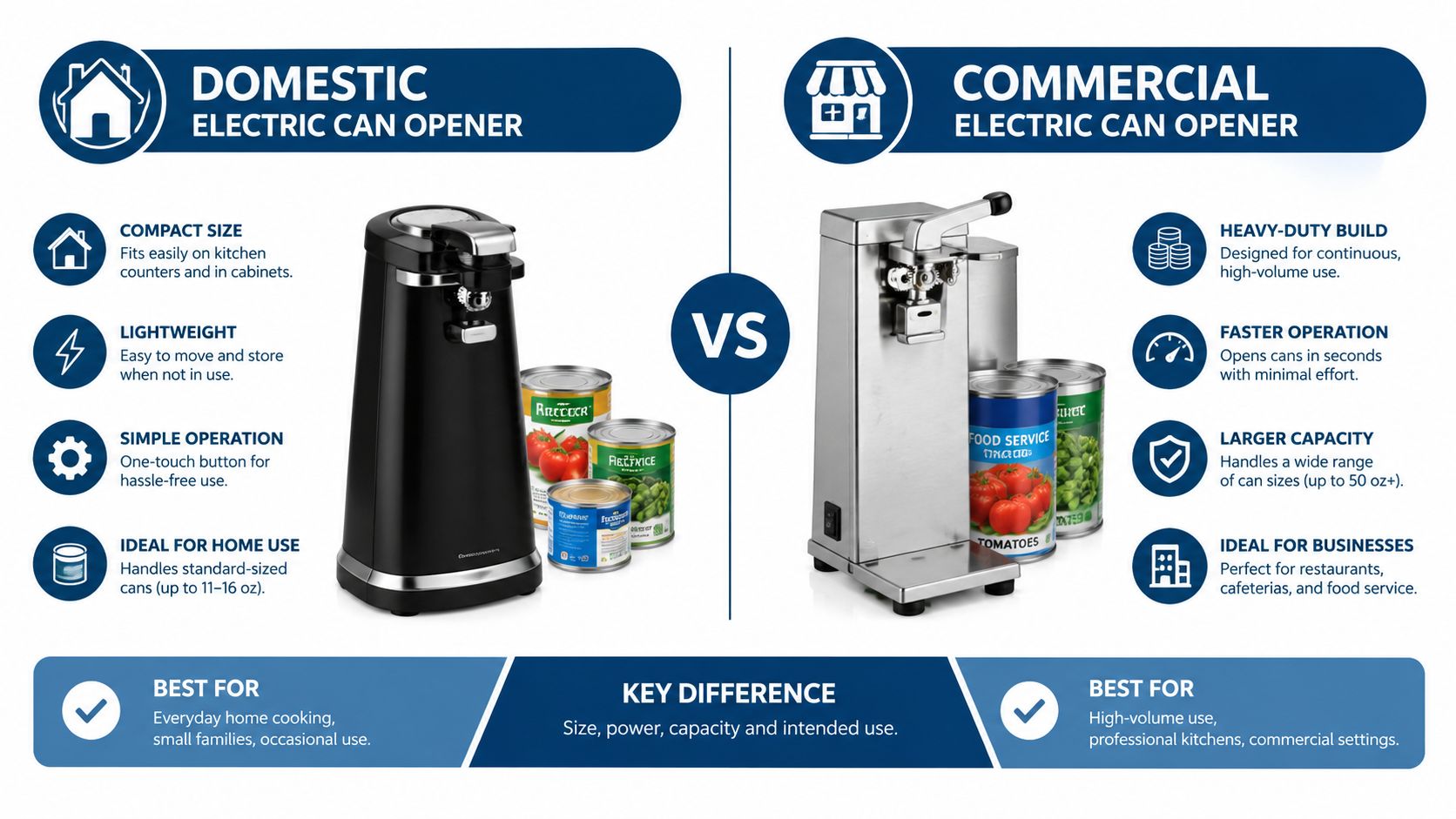
A domestic electric opener and a commercial electric opener can look similar in a product photo. In actual use, they're usually solving different problems.
Where domestic models fit
Small electric openers can suit:
- Home kitchens where convenience matters more than throughput
- Office kitchens with occasional use
- Light-duty accommodation or staff areas where cans are opened infrequently
These units are usually chosen for ease of use and compact size. For occasional opening, that can be completely reasonable. A buyer doesn't always need a larger commercial machine.
What doesn't work is assuming a domestic unit will tolerate repeated prep use just because it's powered. Standards New Zealand notes that appliances intended for professional food processing are not treated as household-use items, so commercial equipment needs confirmation of the manufacturer's applicable commercial safety classification and operating limits (Standards New Zealand IEC 60335-2-14:2025 listing).
Where commercial models make sense
Restaurants, caterers, institutions, aged care kitchens, hospitals, schools, and production-style prep areas should look much harder at commercial-rated electric can openers. The right solution depends on more than motor power.
A commercial buyer should compare:
| Consideration | Domestic electric opener | Commercial electric opener |
|---|---|---|
| Intended use | Occasional or light use | Repeated hospitality or institutional prep |
| Can sizes | Often smaller household cans | Better suited to larger foodservice cans where specified by the manufacturer |
| Construction | Lighter build is common | Heavier construction is common |
| Duty expectations | Short, infrequent tasks | Repeated use during prep periods |
| Cleaning | May be harder to dismantle or wipe effectively | Better designs usually consider cleanability and service access |
| Parts support | May be limited | Replaceable wear components are more important |
| Warranty application | Often consumer-focused | Needs explicit suitability for commercial use |
A domestic rating is not evidence that a unit is suitable for restaurant or institutional service.
One consideration regularly discussed with customers is that a cheap small appliance can become expensive in practice if it jams during prep, can't handle the largest can in use, or can't be cleaned properly between tasks. That's especially true when kitchens buy imported units with unclear duty limits.
For operators comparing broader appliance categories, the differences between domestic, semi-commercial and commercial equipment often show the same pattern. The lower purchase price can look attractive, but the wrong application creates downtime, frustration, and hygiene issues.
How to Analyse Your Can Opening Workload
A common New Zealand prep pattern is quiet early, then compressed. Staff hit the bench an hour before service, open a run of cans for sauces, tomatoes, beans, fruit, or baking ingredients, and any delay lands on the rest of the shift. That is the workload to assess before choosing an electric opener.
Start with the prep run, not the catalogue
Brand names and product photos do not tell you much about suitability. The useful starting point is the can-opening task inside your busiest prep block.
Record:
- Typical can diameter and height
- The largest can used in the kitchen
- How many cans are opened in one prep period
- Whether staff open them back-to-back
- How many days each week that pattern repeats
This gives a better buying brief than a flat daily average.
A café that opens a few small cans across a whole day places very little sustained demand on an opener. A rest home, school kitchen, takeaway shop, or production kitchen may open a full run in a short window, with one staff member feeding cans through continuously. The total count can look similar on paper. The motor load, bench interruption, and wear on moving parts are not.
Measure peak demand at the station
For hospitality equipment, average use often masks the core issue. Peak use is what causes jams, queues at the bench, and rushed workarounds.
Check what happens during the busiest half hour:
- Who opens the cans, and what else are they doing at the same time?
- Are cans opened one after another before service or spread through the shift?
- Are larger foodservice cans part of the regular menu mix?
- Is there enough clear bench space for unopened cans, opened contents, lids, and waste?
- Would a heavy-duty manual unit handle the job with less cost and less bench clutter?
Buy for the heaviest prep block, not the quietest part of the day.
That is usually where operators see the trade-off clearly. If repetitive can opening is slowing mise en place, tying up a staff member, or creating fatigue during a concentrated prep run, an electric unit can improve flow. If the task is light and intermittent, the extra spend, cord management, and cleaning routine may not return much.
Include food safety and can condition
Workload is not only about volume. It is also about what staff are handling and how consistently they inspect it.
Dented rims, sticky residue, damaged seams, and leaking cans all slow the process and raise a food safety question. An electric opener does not fix a compromised can. Staff still need a clear check before opening, with damaged or suspect stock set aside under the kitchen's normal MPI-based receiving and handling procedure.
This matters in practice because rushed prep is where poor decisions creep in. If the opener struggles to grip a damaged can, staff tend to force it, swap tools mid-task, or leave the unit dirty until later. That creates more bench mess and a weaker cleaning routine.
Operators reviewing labour across prep jobs often find the same pattern. Repetition costs time, even when each task looks minor on its own. This article on the cost of manual food preparation in a commercial kitchen is useful if you want to judge whether automation will reduce labour pressure or just add another appliance to maintain.
One more practical check for a New Zealand site is power at the workstation. If the opener is going into a wet or crowded prep area, confirm the socket location, cord path, and day-to-day use will suit your WorkSafe obligations and your own staff handling standards. A good machine still becomes a poor fit if it creates a trip point or ends up plugged in where the station cannot be cleaned properly.
Key Features for a NZ Commercial Kitchen
Once the workload is clear, the shortlist becomes easier. The best commercial choice is usually the model that fits the cans, fits the station, and can be cleaned and maintained without fuss.
Focus on wear points and cleanability
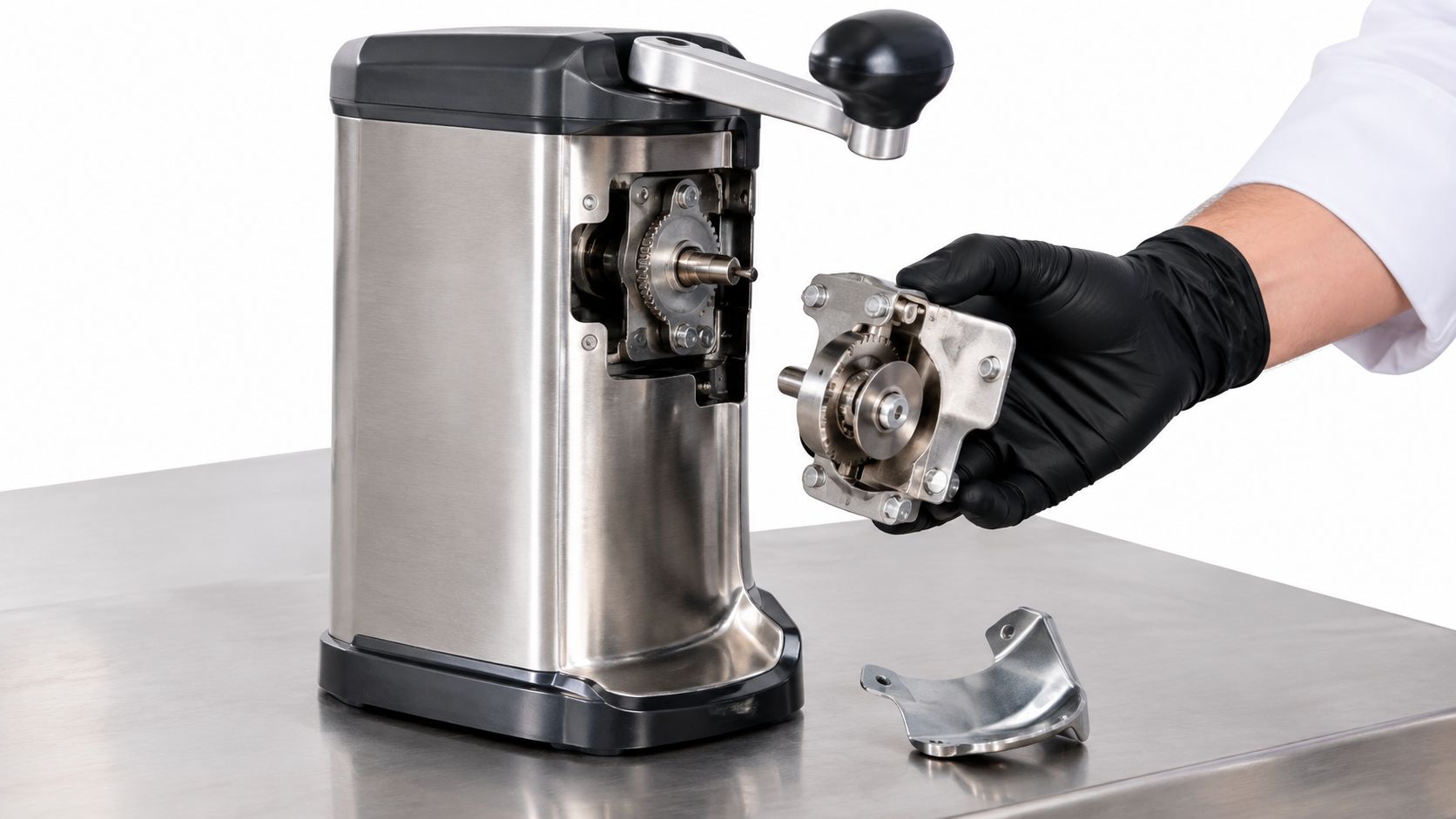
The cutting wheel or blade and the drive components are the parts that do the heavy lifting. They're also the first areas to scrutinise.
Commercial buyers should check:
- Replaceable cutting components: If the wear part can't be replaced, a small issue can sideline the whole machine.
- Cleaning access: Food residue can build up around blades, feed wheels, shafts, and guides.
- Removable parts where designed to be removed: That makes routine sanitation easier and more consistent.
- Straightforward maintenance procedures: If cleaning is awkward, it often gets delayed.
A defensible cleaning workflow in a New Zealand food business should align with MPI guidance. Cleaning removes dirt and grease, sanitising reduces harmful organisms, and food-contact surfaces and equipment should be cleaned and sanitised with clean water and suitable food-grade chemicals. The practical sequence is to isolate power, remove the cutting assembly if the design allows, remove visible residue, wash, rinse, sanitise according to the label, dry, then inspect the mechanism before reuse (MPI cleaning and sanitising guidance).
Workshop note: Wiping the blade and putting the opener straight back into service isn't the same as cleaning and sanitising.
Bench position and electrical suitability
An opener that technically works can still be wrong for the station. Bench placement should be planned around real prep movement, not spare corners.
Check:
- Machine dimensions
- Clearance for the largest can
- A stable working surface
- Dry power access
- Space for lids, waste, and opened cans
- Distance from sinks and spray zones
WorkSafe New Zealand advises checking that any appliance has the correct plug and voltage, inspecting cords, and having faulty equipment repaired by a qualified person. For hospitality, 230–240 V compatibility and an approved NZ plug are fundamental procurement checks, especially for imported or second-hand units (WorkSafe advice on electrical equipment and appliances).
A common issue seen in prep areas is placing a small appliance too close to wet work. WorkSafe guidance also identifies wet or damp environments as an increased electric-shock risk, so the lead, plug, and housing all need protection from wash-down activity and wet hands. Staff should isolate power before cleaning and should never spray liquid into a motor housing.
Electric versus a heavy-duty manual bench opener
This comparison is worth making properly.
A heavy-duty manual bench opener suits kitchens that want:
- simple mechanics
- no power dependence
- solid moderate-use performance
- fewer electrical considerations
A commercial electric opener becomes more compelling where:
- staff open cans repeatedly in concentrated prep periods
- manual opening creates unnecessary physical effort
- workflow improves when one person can keep moving through prep
For some workplaces, commercial vs semi-commercial appliances for workplace environments is a helpful way to test whether the task really justifies a commercial electric unit, or whether a simpler option would handle the demand just as well.
A Practical Buying Checklist for Your Business
The buying mistake I see most often is treating an electric can opener as a minor bench appliance. In a New Zealand commercial kitchen, it affects prep speed, cleaning discipline, staff handling, and whether the unit suits the power and bench conditions around it. A poor fit usually shows up during the busiest hour of service prep, not on delivery day.
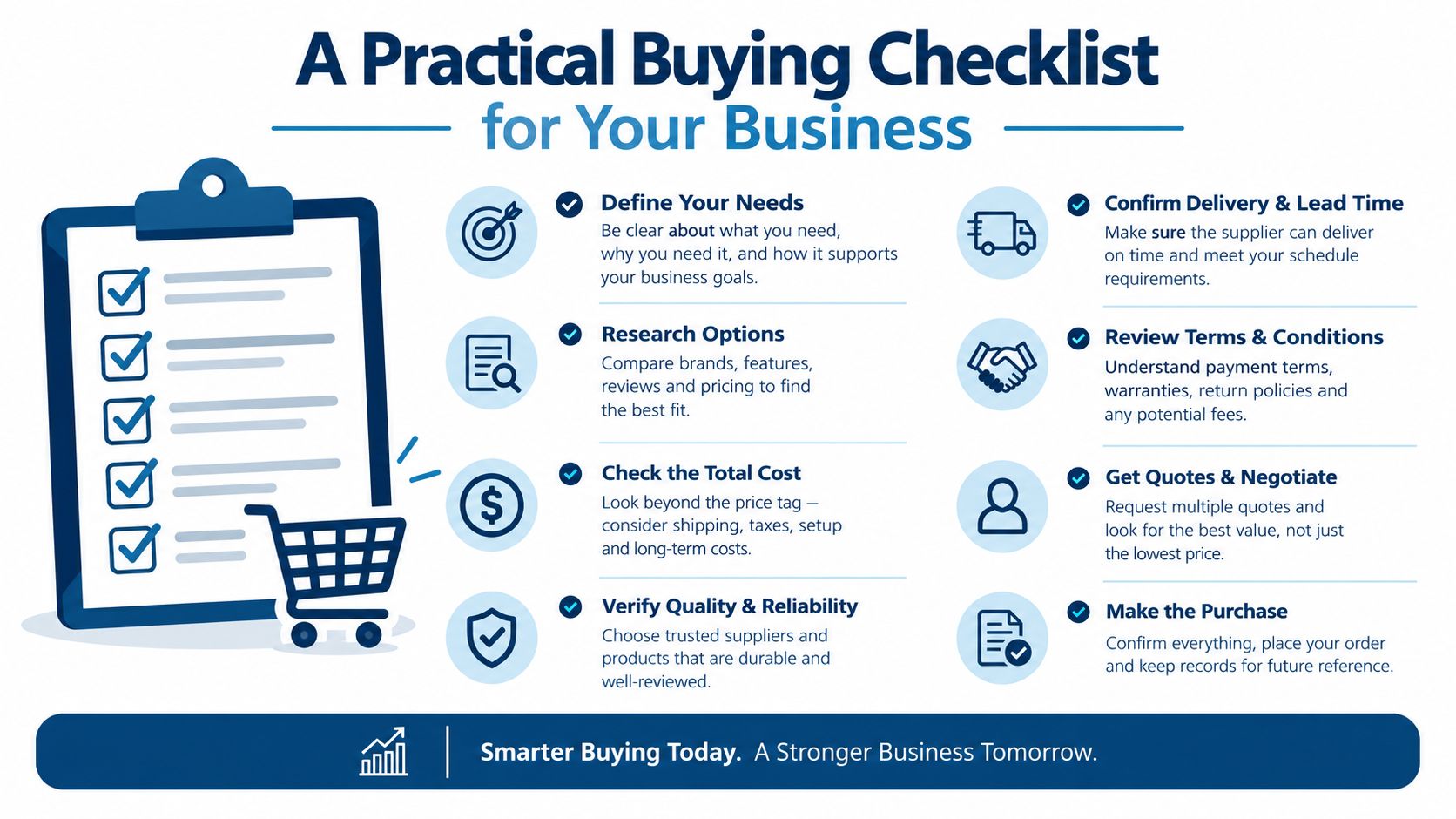
Start with the actual job the opener has to do.
The checklist that matters
Use this checklist before buying any electric can opener for a café, rest home, school kitchen, community facility, or hospitality venue in NZ:
- What can sizes do you open every week?
- How many cans are opened in the busiest prep window, not across the whole day?
- Do staff open them one after another, or only occasionally between other tasks?
- Is the unit intended for commercial use, with duty levels that match your kitchen?
- Will your largest cans fit without awkward handling or re-positioning?
- Can food-contact parts be removed or cleaned properly under your existing cleaning routine?
- Are blades, wheels, or cutting assemblies replaceable?
- Is there enough bench space, height clearance, and safe separation from sinks or wet work?
- Does the plug, lead, and appliance condition suit a workplace environment?
- Would a heavy-duty manual bench opener do the job at lower cost and lower maintenance?
Question 10 saves a lot of buyers from overspending. If cans are opened in short bursts and volumes stay moderate, a good manual unit often gives better value over time.
Food safety and cleaning should decide the shortlist
For businesses operating under a Food Control Plan or National Programme, the opener has to fit the way staff already clean, check, and store prep equipment. If the cutting head traps residue, or if staff need tools to remove parts for washing, that problem will surface quickly in a busy prep room.
An electric opener is not automatically cleaner than a manual one. The better option is the one your team can wash, inspect, and return to service consistently without guessing. That matters for MPI expectations around keeping food contact areas clean and preventing contamination from damaged packaging, metal fragments, or built-up residue.
Choose the unit staff will clean properly between uses.
It also helps to map the full task, not just the cut. Open the can. Check for metal slivers or damaged rims. Empty contents without the lid falling back into food. Clean the opener to the maker's instructions. Dispose of lids and empty cans so they do not sit on the prep bench. Those steps affect food safety more than a sales sheet does.
Check the installation reality, not just the spec sheet
Bench clearance matters. So does where the opener will live during service. A compact unit placed beside a sink, under a low shelf, or on a crowded prep bench can create more friction than it removes.
Electrical suitability matters as well. In workplace settings, the appliance, plug, and lead need to be appropriate for the area and protected from moisture, knocks, and poor storage habits. That is particularly relevant in NZ kitchens where wash-down practices, stainless benches, and shared power points are common. Buying the right unit is only half the job. Placing it in a safe, workable spot is what makes it usable.
Buy for ownership cost, not purchase price
Low-cost units often become expensive through blade wear, slow cleaning, short service life, or replacement delays. Commercial buyers should ask three plain questions before ordering: what parts wear first, how quickly can those parts be replaced, and who will service the unit if it fails during a busy week?
If this purchase is part of a wider fit-out or equipment review, a broader catering equipment checklist for commercial kitchen planning helps put the opener in context with the rest of the prep line. Operators comparing several countertop workstations may also find our buyer's guide to twin fryers useful, because the same thinking applies to throughput, cleaning access, and day-to-day station layout.
Hospitality providers assist New Zealand hospitality businesses in choosing commercial equipment that fits workflow, cleaning procedures, and day-to-day prep demands. For advice on can openers, food-preparation equipment, or building out a more efficient prep station, visit Simply Hospitality.