


Floor Cleaner NZ for Hospitality Kitchens
A café manager finishes the breakfast rush, looks across the kitchen floor and sees a familiar problem: greasy patches around the fryer, food residue near the prep benches and a damp surface that still feels slippery after mopping. Reaching for the strongest available chemical may seem sensible, but it can leave residue, damage the finish or create a trade-waste problem without solving the underlying issue.
The right floor cleaner NZ operators choose depends on the floor material, the contamination, the cleaning frequency and the equipment used to apply and remove the solution. A routine neutral cleaner, a commercial degreaser and a disinfectant each have different jobs. Effective floor care comes from matching the chemical, dilution and workflow to the application, not from using the most aggressive product everywhere.
Why One Floor Cleaner Never Fits Every Venue
A single heavy-duty cleaner rarely suits every part of a hospitality venue. A quarry-tiled cooking line, a vinyl corridor, a sealed concrete store room and a timber-look front-of-house floor may need different chemistry and different moisture control.
The first question is what needs removing. General dust, footprints and light food residue call for a different approach from cooking oil, protein soil or grease deposited beside a fryer. A neutral floor cleaner can be suitable for routine maintenance on compatible surfaces, while periodic deep cleaning may require an alkaline cleaner or degreaser. Neither product should automatically replace the other.
The second question is what the floor can tolerate. Floor finishes, grout, sealants and coatings respond differently to alkaline, acidic and solvent-based products. Flooring manufacturer instructions take priority, especially where a venue has epoxy coatings, sealed concrete, vinyl or timber and laminate surfaces.
Four buying decisions that matter
- Surface compatibility: Confirm the cleaner is suitable for the flooring, grout and finish, not just the visible soil.
- Contamination type: Separate daily dirt removal from heavy grease removal around cooking equipment.
- Cleaning method: A manual mop, dual-bucket system, wet vacuum or scrubber-dryer can change the product required.
- Prepared-solution cost: Compare the cost per correctly diluted litre, rather than the price of the container alone.
Domestic products are designed for lower-use household conditions and may be convenient for a small office or low-traffic area. Commercial chemicals can offer concentrated dosing and documented handling information, but they also demand better training, labelling and storage.
Practical rule: A cleaner that removes grease effectively isn't automatically appropriate for daily use across the entire venue.
A common issue seen in hospitality businesses is a slippery floor caused by the wrong chemistry or incorrect dosing, rather than a lack of cleaning effort. Too much detergent can leave a film. Too little degreasing action can leave cooking oil behind. Poor rinsing can spread the residue into a wider area.
Concentrate can reduce packaging and storage bulk when staff measure it accurately. Operators comparing formats may find this explanation of why concentrate beats bulky bottles useful, although commercial purchasing still needs to account for the product label, SDS and venue-specific requirements. A broader purchasing checklist is available in the commercial cleaning supplies checklist.
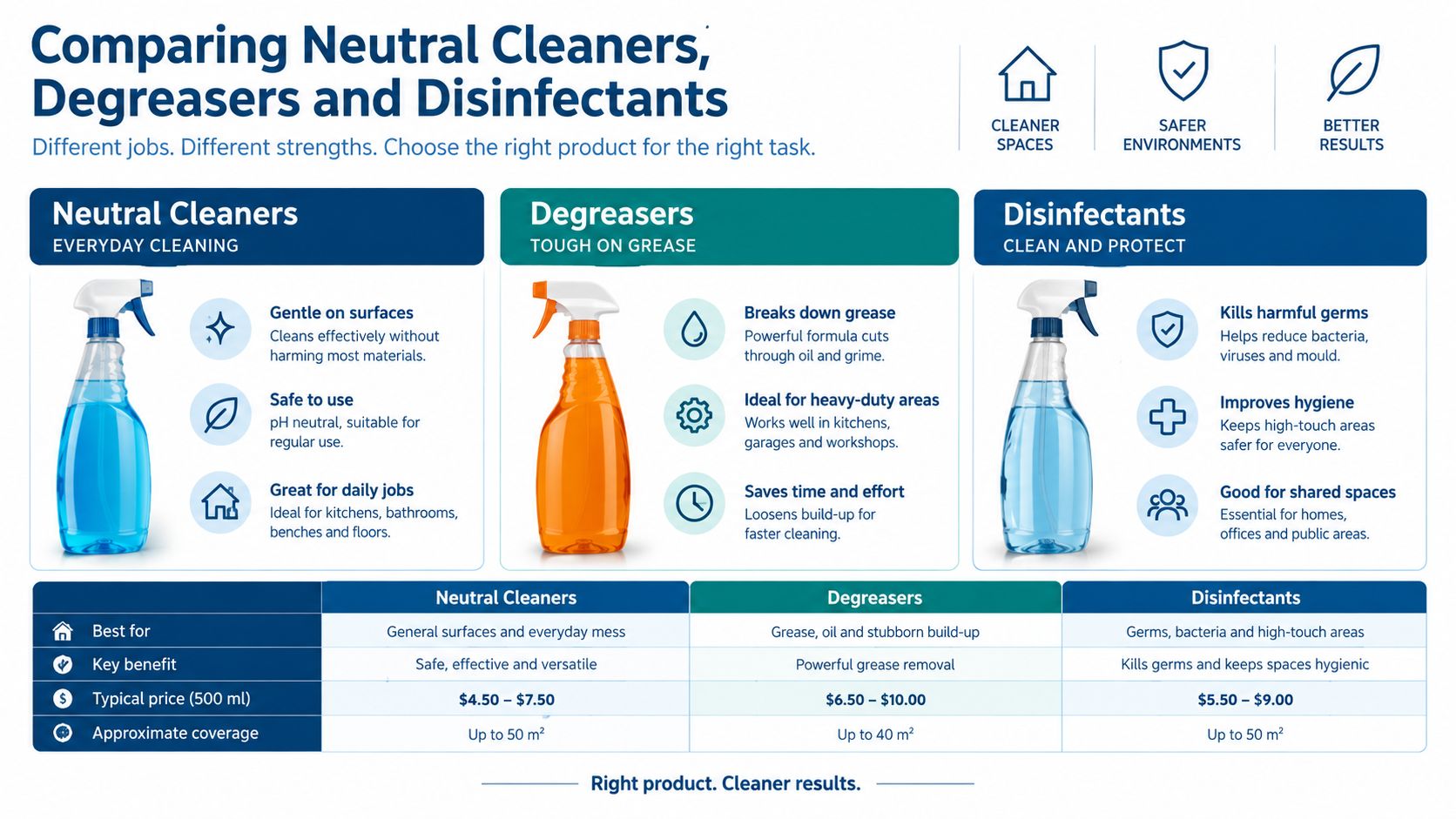
Comparing Neutral Cleaners, Degreasers and Disinfectants
Commercial floor chemicals are easier to manage when each category has a defined role. The most useful distinction is between routine cleaning, degreasing and disinfection.
Neutral floor cleaners
Neutral cleaners are often the sensible choice for everyday cleaning on compatible flooring where aggressive grease removal isn't required. They can suit dining areas, corridors, accommodation spaces and routine kitchen maintenance after the main soil has been removed.
Their advantage is controlled, regular use. Their limitation is equally important. A neutral product may not break down a concentrated grease deposit beside a fryer, so relying on it for every task can produce a floor that looks cleaner but remains contaminated or slippery.
Alkaline cleaners and degreasers
Alkaline chemistry can be appropriate for heavy kitchen grease, food residues and protein soils, subject to the formulation and floor surface. It needs more disciplined handling than a routine cleaner.
An NZ-published Safety Data Sheet for one alkaline floor cleaner lists a pH of 13.50 for the undiluted product and classifies it as hazardous under New Zealand EPA criteria. The SDS requires controls including avoiding mist or vapour inhalation, wearing protective gloves and eye or face protection, and washing thoroughly after handling. The product's strength may assist with fats and protein soils, but incorrect dilution or dwell time can injure skin and eyes or harm sensitive finishes. The product Safety Data Sheet should be read alongside the label before use.
Disinfectant floor cleaners
A disinfectant product is intended to reduce microorganisms when used according to its approved label instructions. It isn't a substitute for removing grease and food soil first.
New Zealand Ministry for Primary Industries guidance states that sanitising is effective only after a surface has been thoroughly cleaned. Applying disinfectant over a visibly greasy floor can therefore leave an inadequate microbiological-control result. The MPI cleaning and sanitising guidance supports treating cleaning and sanitising as separate stages where the risk assessment requires both.
Cleaning removes the soil. Sanitising or disinfecting addresses microorganisms after the surface has been cleaned.
Specialist, concentrated and ready-to-use formats
Specialist products may be formulated for a particular coating, floor machine or cleaning outcome. Concentrates reduce storage volume and can lower the cost per prepared litre, but they introduce measuring and handling risks. Ready-to-use products simplify dosing, though the operator should still check suitability and overall operating cost.
A practical programme may use a neutral cleaner for routine areas, a compatible degreaser for high-soil zones and a disinfectant only where the food-safety procedure calls for it. More detail on pH, hazard controls and product roles appears in this guide to understanding commercial cleaning chemicals.
Matching Chemicals to Commercial Floor Surfaces
The same floor cleaner NZ product shouldn't be treated as suitable for every hard surface. The floor's construction, protective coating, grout and drainage design all affect the cleaning method.
Manufacturers' care instructions take priority over general advice. A strong alkaline product, acid or solvent may strip a sealant, dull a coating, attack grout or create a warranty issue. The table below is a starting point for a product conversation, not permission to ignore the flooring specification.
Floor Surface and Cleaner Compatibility Guide
| Floor Type | Common Challenges | Cleaner Considerations | What to Avoid |
|---|---|---|---|
| Commercial ceramic and porcelain tiles | Food spills, grease in grout lines and tracked dirt | Use a tile-compatible neutral cleaner for routine work. A suitable degreaser may be needed in kitchen zones, subject to grout and manufacturer guidance. | Unverified chemistry, abrasive tools and excessive detergent that leaves residue in textured surfaces |
| Quarry tiles | Porous texture, cooking grease, soil in joints and damp conditions | Choose a product compatible with the tile and any sealer. Allow sufficient agitation and remove dirty solution rather than redistributing it. | Assuming a stronger product is always safer, or using acids and alkalis without checking the tile and grout specification |
| Vinyl flooring | Scuff marks, tracked grit, spills and finish wear | Use a cleaner approved for the vinyl and its surface finish. Control water and use a damp method where the installation requires it. | Solvents, abrasive pads, excess water and chemicals that attack the finish |
| Sealed concrete | Oil, dust, tyre or trolley marks and wear through traffic | Confirm compatibility with the concrete sealer. A suitable degreaser may help in greasy zones, followed by effective residue removal. | Unapproved acidic products, over-dosing and standing water that can affect the seal |
| Epoxy-coated floors | Grease, scuffing, chemical exposure and coating wear | Use the coating supplier's recommended cleaner and check whether machine scrubbing is permitted. | Harsh chemistry, abrasive pads, excessive dwell time and unverified solvent products |
| Timber and laminate where relevant | Moisture at joins, finish damage, streaks and swelling | Use only a product approved for the specific finish, with controlled moisture and a damp rather than flooded method. | Steam, excess water, vinegar, ammonia, bleach and general kitchen degreasers unless the manufacturer specifically approves them |
Front-of-house timber or laminate needs a different mindset from a wash-down kitchen floor. Advice on cleaner selection for wood floors reinforces the importance of limiting moisture and avoiding chemistry that can damage a finish. In a commercial venue, the floor supplier's written guidance remains the controlling reference.
Check the floor before changing the chemical
A venue manager should identify the exact floor type, coating and grout condition before ordering a new product. Staff should also test an unfamiliar chemical in a discreet area, follow the label and monitor the result after drying.
The visible soil matters just as much. A neutral product may be ideal for dining-room maintenance but inadequate beside a fryer. Conversely, a degreaser that works on quarry tiles may be unsuitable for vinyl or an epoxy coating.
For specialist tools and surface-specific options, operators can review specialist cleaning supplies before building a mixed system.
The True Cost of Dilution and Trade Waste Rules
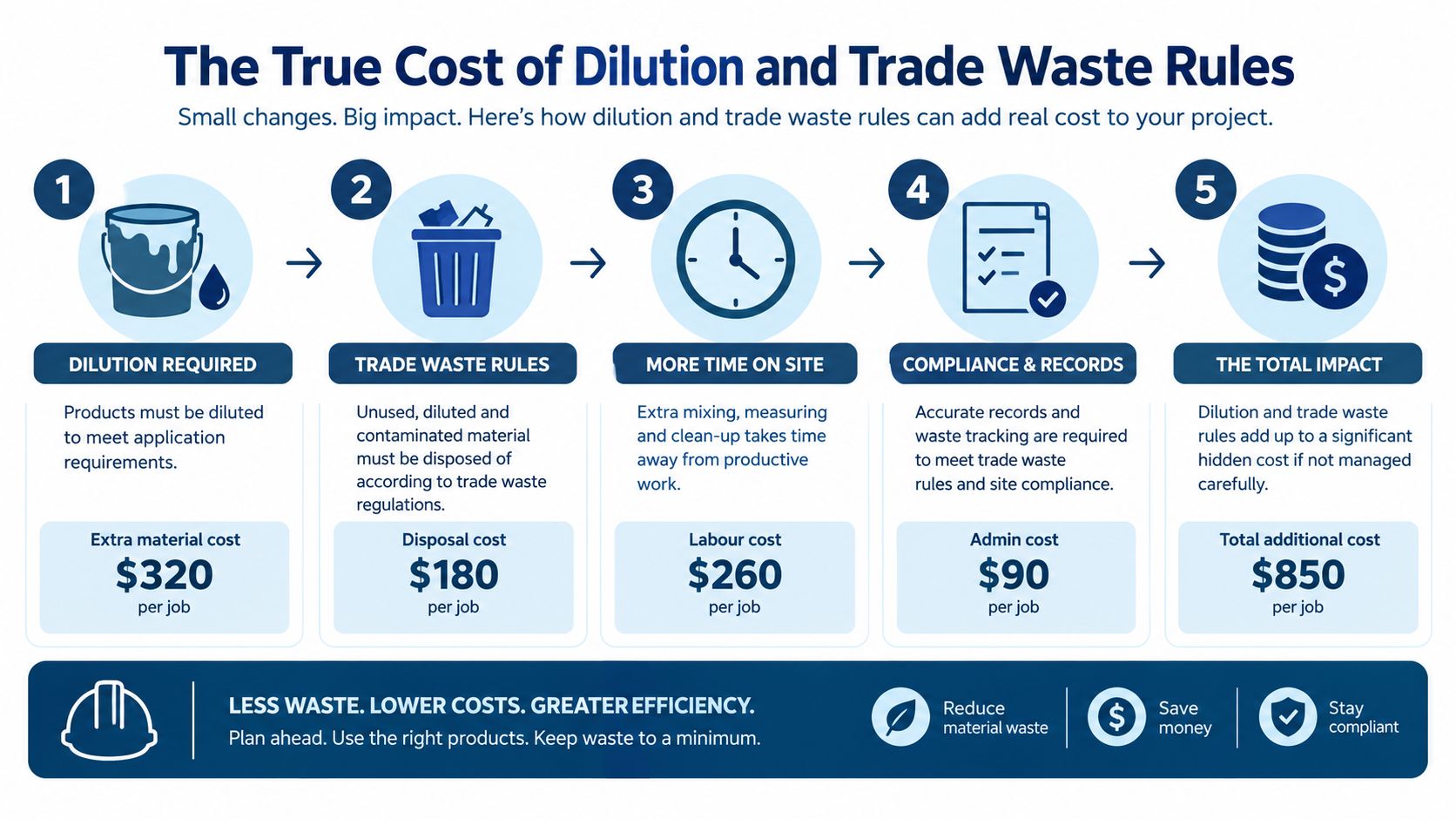
The container price tells only part of the story. A concentrated commercial cleaner needs to be assessed by the cost of correctly diluted solution, the labour required to measure it, the rinsing it creates and the way the wastewater enters the drainage system.
Over-dosing doesn't guarantee a cleaner floor. It can increase cost, leave a slippery film, demand additional rinsing and expose staff to more concentrated chemistry during preparation. Under-dosing can leave grease behind and encourage staff to repeat the task.
A hypothetical cost calculation
Consider a hypothetical 5 L concentrate costing NZ$60, diluted at an illustrative 1:100 ratio, interpreted as one part concentrate to 100 parts water. That produces approximately 505 L of prepared solution, making the chemical cost approximately 12 cents per litre of prepared solution.
This is an example only, not a real product specification. Dilution notation varies between manufacturers, and the label may define the ratio differently. Staff should use the supplier's stated method, a calibrated dispenser or a measured dosing tool rather than copying a ratio from another product.
The calculation also excludes labour, equipment, water, disposal and any required rinsing. A product with a low prepared-solution cost may still be a poor choice if it damages a finish, needs repeated application or creates a difficult slip problem.
Trade waste is part of product selection
Commercial operators need to ask what happens after mop water leaves the floor. Councils define trade waste as liquid discharged from commercial premises, and local consent or pretreatment requirements may apply.
Wairoa District Council warns that detergents can emulsify grease, allowing it to pass through grease traps and contribute to wastewater blockages. Its trade-waste guidance advises businesses to use only the specified product amount and avoid bleach, caustic soda, solvents and other unapproved substances.
The correct process is location-specific:
- Check consent conditions: Confirm what the local council allows and whether the kitchen wastewater route is covered.
- Review the SDS: Record hazards, dilution, disposal advice and storage requirements.
- Confirm grease-trap arrangements: Establish whether floor-cleaning wastewater enters a grease trap and whether the product can emulsify fats.
- Control concentrates: Don't pour unused concentrate into a drain. Follow the label, SDS and council requirements.
- Train the team: Make dosing and disposal part of the cleaning procedure, not an informal staff habit.
A product labelled environmentally preferable isn't automatically compatible with every trade-waste system. The council, the SDS and the venue's drainage design need to be assessed together. Operators looking at controlled dosing can review cleaning chemical dispenser systems.
Executing a Safe and Effective Cleaning Workflow
A reliable floor-cleaning result starts before the mop touches the floor. Staff need to remove loose material, identify the soil, choose the correct chemical and keep dirty solution away from already cleaned areas.
A practical sequence for kitchens and public areas
- Remove loose debris first. Sweep, vacuum or collect food scraps, grit and dry soil. MPI guidance expects food businesses to sweep, vacuum and/or mop areas, use clean water, follow chemical instructions and use food-grade cleaning chemicals where relevant. The MPI food-business cleaning guidance supports this dry-to-wet sequence.
- Identify the contamination. Light dirt may need a neutral cleaner. Grease around fryers and cooking lines may call for a compatible degreaser. Don't treat a visible spill as a routine maintenance pass.
- Prepare the solution accurately. Use the label dilution, clean water and a labelled container. Never mix cleaning chemicals. A stronger mixture can create residue, surface damage and additional handling risk.
- Apply with the right tool. Use a commercial mop for controlled areas, a scrubbing brush for stubborn deposits or a machine for suitable open floor areas. Agitate where soil is bonded rather than just spreading more solution.
- Allow the required action time. Follow the label for dwell or contact time. Disinfectant claims depend on the approved instructions, and a product can't be assumed to disinfect because it smells strong.
- Remove dirty solution. Use a clean-water and dirty-water system, floor squeegee or wet vacuum as appropriate. Repeatedly pushing contaminated mop water across the floor undermines the cleaning result.
- Rinse where required. Some products require rinsing, particularly where residue or food-area requirements make it necessary. Follow the label and surface guidance.
- Dry and reopen safely. Keep people away until the floor is dry and the area has been checked. Use wet-floor signage and suitable footwear during the task.
Equipment can matter more than stronger chemistry
A dual-bucket mop system helps separate clean solution from recovered water. A floor squeegee moves wash water toward the intended collection point, while a wet vacuum can remove water from larger areas and textured surfaces. Automatic scrubber-dryers can suit venues with broad, accessible floors, but the pad, brush, chemical and recovery settings must match the surface.
The floor should be checked after drying. If it remains slippery, staff should investigate detergent residue, incomplete grease removal, redeposited soil, standing water, poor drainage and floor condition. A cleaner can't make a floor that is unsuitable by nature slip-resistant.
A stronger chemical is often the wrong response to a weak recovery process. Remove the soil and dirty water first.
Food-premises rules also make timing important. For eatinghouses, floors must not be cleaned while food is being prepared, served or consumed unless the method is a suction cleaner or another dustless approach. The New Zealand food-premises regulation therefore supports scheduling wet mopping outside active service and using low-dust methods when cleaning during service.
A written programme should define who cleans each zone, which method applies and how staff record checks. MPI's cleaning programmes for cafés resource can help operators organise that process.
Commercial Systems Versus Supermarket Products
A supermarket floor cleaner may be adequate for a small, low-traffic workplace where the soil is light and the surface is straightforward. It becomes less practical when a venue has repeated grease exposure, several floor materials, large cleaning areas or staff working across different shifts.
Commercial products aren't automatically safer, more effective or cheaper. Their value depends on whether the formulation, documentation and dispensing method suit the site. A concentrated product may reduce storage volume and prepared-solution cost, but poor dosing can erase that advantage.
Where commercial systems earn their place
Commercial cleaning systems usually make the most sense when the venue needs repeatable results rather than ad hoc cleaning.
- Consistent dosing: A dispenser can reduce guesswork between shifts and help staff follow the label.
- Documented handling: Labels and SDSs support training, PPE selection, storage and emergency procedures.
- Suitable equipment: Commercial mops, buckets, brushes, squeegees and wet vacuums are designed for repeated operational use.
- Zone-specific cleaning: The kitchen, bar, dining room, amenities and back-of-house areas can each have a defined product and method.
- Stock control: Concentrates and janitorial supplies can be ordered around the venue's actual cleaning programme.
Simply Hospitality offers Matthews Packaging & Hygiene floor-care chemicals and associated janitorial supplies, including options within categories such as neutral floor cleaners, commercial degreasers, disinfectant cleaners, mops, buckets, scrubbing brushes, floor squeegees, wet-floor signage and chemical dispensing equipment, subject to current stock and product specifications.
Product selection should start with the venue, not the catalogue. A small café may need a simple neutral cleaner, mop system and spill-response setup. A hotel may need separate approaches for guest corridors, kitchens, amenities and service areas. An institutional kitchen may need stronger documentation around cleaning schedules, storage and verification.
What should be checked before ordering
The purchasing team should confirm:
- The floor material and finish.
- The main soil types.
- Whether the product is concentrated or ready to use.
- The stated dilution and contact instructions.
- Whether rinsing is required.
- The available SDS and label.
- Compatibility with manual or machine cleaning.
- Packaging size and storage space.
- Trade-waste implications.
- Staff capability and dispensing controls.
A supermarket bottle chosen by habit can create inconsistent results when multiple staff members use different amounts. A commercial product chosen without checking surface compatibility can create a more expensive problem. The right system is the one staff can use accurately, safely and repeatedly during real service conditions.
Navigating NZ Safety and Compliance Requirements
The assumption that a stronger floor cleaner creates a safer kitchen is flawed. Chemical strength can improve grease removal in the right application, but it also increases the consequences of poor dilution, splash exposure, vapour inhalation, inadequate ventilation and incorrect storage.
New Zealand hospitality evidence shows why this deserves operational attention. WorkSafe New Zealand's Worker Exposure Survey found that 68.7% of hospitality workers reported exposure to cleaning products, while 30.3% reported exposure to solvents and 20.2% to degreasers. The survey also found that 51% experienced wet-work exposure, averaging 2.3 hours per day, and hospitality workers reported washing their hands an average of 26 times daily. These findings cover cleaning chemicals broadly, not floor cleaner alone, but they show how routine chemical and wet-work exposure can be in hospitality. See the WorkSafe Worker Exposure Survey.
Repeated contact with detergents and wet work can contribute to irritant or allergic contact dermatitis. The same survey reported that almost all workers exposed to wet work said their employer provided gloves, but only 68% said they used them, showing that availability doesn't guarantee correct use.
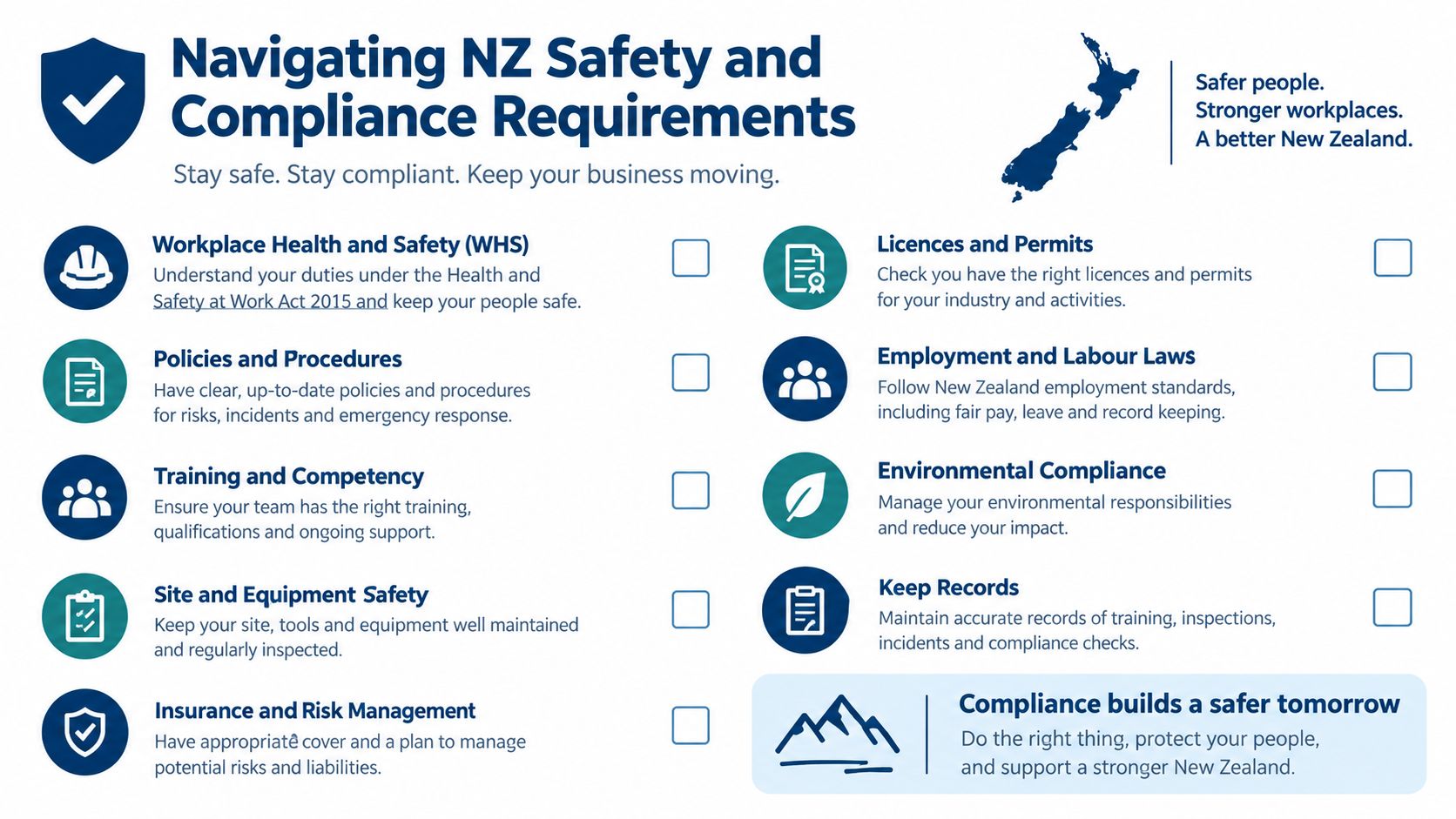
Minimum controls for a venue
- Read the SDS and label: Confirm hazards, dilution, PPE, ventilation, first aid, storage and disposal.
- Train the team: Staff should know which chemical belongs in each area and what must never be mixed.
- Use labelled containers: Don't decant into an unmarked bottle or rely on memory for dilution.
- Provide suitable PPE: Gloves and eye or face protection should match the chemical and task.
- Store chemicals away from food: MPI National Programme 1 guidance expects cleaning chemicals and equipment to be stored away from food, with cleaning tools maintained regularly. Review the MPI National Programme 1 guidance.
- Monitor the programme: MPI HACCP guidance treats cleaning as a managed food-safety control, including floors, with defined methods and checks for effectiveness. The MPI HACCP guidance supports assigning responsibility and recording verification where required.
A compliant floor-care programme connects product choice, floor design, equipment, staff behaviour, trade waste and food safety. Operators should adapt general guidance to their own risk assessment, chemical inventory and workplace procedures.
Simply Hospitality can help hospitality businesses compare Matthews Packaging & Hygiene floor-care chemicals with suitable mops, buckets, squeegees, signage and dispensing equipment for their floors and cleaning routines. Visit Simply Hospitality to discuss a practical floor-cleaning setup for a restaurant, café, kitchen, bar, hotel or institutional venue.