

Wooden Utensils NZ: A Commercial Kitchen Guide
The popular advice is simple: choose wood because it's natural, gentle and more sustainable. That's not enough for a commercial kitchen. For restaurants, cafés, bakeries, caterers and food-production teams, the right utensil depends on the food being handled, the cookware surface, the cooking process, the required strength and the cleaning system. A wooden spoon may be exactly right for stirring a sauce, while stainless steel or silicone may be safer and more efficient for another task.
New Zealand has a long wood-products tradition. Te Ara records locally made European-style furniture from 1792, early furniture made from split wood, and a domestic furniture industry that employed 8,500 people in 2007 before falling to 6,000 in 2011, while the number of firms fell from 1,800 to 1,300 (Te Ara's furniture history). Wooden kitchenware sits within that wider tradition, but heritage and appearance shouldn't replace practical purchasing decisions.
Choosing the Right Wooden Utensils for Commercial Kitchens
A wooden utensil isn't automatically the most sustainable, hygienic or economical choice. It earns its place when its handling characteristics suit the job and when the kitchen can clean, dry, inspect and replace it appropriately.
Wooden spoons and spatulas remain useful because they're comfortable to handle, relatively simple in construction and generally transfer less heat through the handle than metal. They can also provide a gentler contact surface for cookware where aggressive scraping isn't required. Those advantages matter during repetitive prep and cooking, particularly when staff are stirring sauces, folding mixtures or working in pans where the surface needs careful treatment.
The mistake is outfitting an entire kitchen with one material. A wooden turner may work well for moving soft ingredients in a suitable pan, but it won't necessarily provide the rigidity needed for heavy turning or scraping. A wooden tong, where stocked and appropriate, may suit light handling or presentation, while stainless steel may be more dependable for stronger gripping and demanding cleaning routines.
Practical rule: Choose the utensil by task first, then check whether wood, stainless steel or silicone best supports that task.
Build the utensil set around workflow
A useful smallwares inventory usually includes a deliberate mix rather than a single material:
- Wooden spoons: Suitable for stirring, mixing and some cooking tasks where a firm but relatively gentle surface is helpful.
- Wooden spatulas and turners: Useful for folding, scraping lightly and handling food in compatible cookware.
- Stainless steel utensils: Appropriate where rigidity, strength or a more demanding cleaning process matters.
- Silicone utensils: Useful where flexibility, edge conformity and heat resistance are important, subject to the product's instructions.
A kitchen utensil holder can support orderly storage and reduce time spent searching for the right tool. The kitchen utensil holder guidance from Simply Hospitality is relevant to that workflow decision, although storage alone doesn't solve poor cleaning or damaged equipment.
The commercial calculation is straightforward: suitability, durability, staff usability, hygiene, replacement availability and price all matter. A low-priced wooden spoon that is frequently discarded may not offer better value than a more suitable utensil that remains serviceable under the kitchen's documented procedures.
Comparing Wood with Stainless Steel and Silicone
A line cook may move from sauce reduction to searing, then finish plating within one service. A wooden spoon suits the reduction, a stainless steel turner provides the rigidity needed for searing, and a silicone scraper clears sauce from a bowl or pan. Heat transfer, cookware contact, and cleaning compatibility determine which material fits each task.
Wood generally stays more comfortable in the hand during extended stirring because it transfers less heat through the handle than metal. It also provides relatively gentle contact with compatible cookware. Stainless steel offers rigidity and strength for turning, lifting, or firm scraping where a flexible utensil could bend. Silicone provides a flexible edge that follows the shape of a bowl or pan, although the product and its care instructions still determine where it can be used.
Commercial Utensil Material Comparison
| Material | Heat Transfer | Cookware Impact | Best Commercial Application |
|---|---|---|---|
| Wood | Relatively low heat transfer through the handle compared with metal | Generally gentle contact when used appropriately | Stirring, mixing, light scraping and selected cooking or service tasks |
| Stainless steel | Higher heat transfer through the handle than wood | Rigid contact, with a risk of damaging unsuitable cookware surfaces | Heavy turning, lifting, firm scraping and tasks requiring strength |
| Silicone | Usually lower heat transfer than metal, with a flexible working edge | Gentle contact when the product is suitable for the cookware | Folding, scraping bowls, sauce work and tasks needing flexibility |
Wood requires more deliberate condition management than a smooth, non-porous metal utensil. Its surface and construction need to remain suitable for the work assigned to it. Silicone can reach into shaped vessels more effectively, but flexibility becomes a disadvantage when staff need firm purchase. Stainless steel handles demanding turning and scraping well, though it may damage cookware with delicate surfaces.
Cookware compatibility should be checked before standardising a material across the line. A stainless turner can be appropriate for suitable pans and the wrong choice for another surface. Silicone can protect compatible cookware while slowing a task that depends on a rigid edge. Wood sits between those options, offering controlled stirring and light scraping without the heat transfer of metal.
For operators assessing silicone accessories and related kitchen tools, this practical discussion of silicone moulds supports the same application-led approach. Food-contact material should match the vessel, temperature, force, and cleaning process involved.
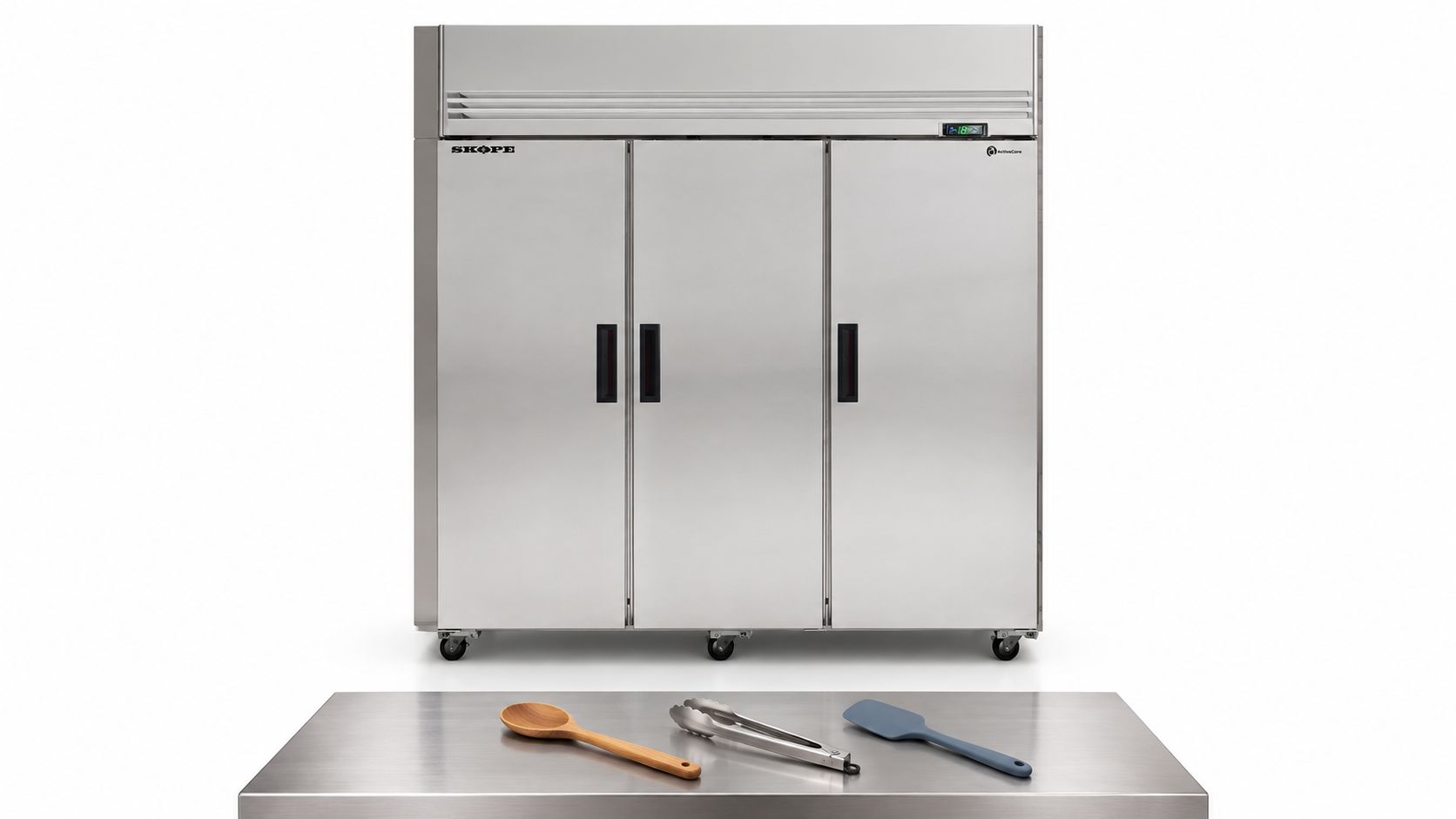
The SKOPE ActiveCore 3 Door Storage Freezer, Stainless, SKFT1500NS-A illustrates the same purchasing discipline: assess equipment against its operating requirements. Utensils deserve that level of attention too.
A practical kitchen keeps alternatives available. Use wood for gentle stirring, silicone for flexible scraping, and stainless steel where strength matters, while following cookware and product instructions.
Food Safety and Hygiene Standards for Wooden Kitchenware
Are Wooden Utensils Suitable for Commercial Kitchens in New Zealand?
Wooden utensils can work in commercial kitchens, provided they are made for food contact, cleaned effectively, kept in sound condition, and included in the venue's food-safety procedures. The material alone does not determine hygiene performance. Operators need to assess whether each utensil can be maintained for the food, temperature, handling demands, and cleaning workflow involved.
New Zealand guidance indicates that wooden chopping boards can be appropriate when cleaned after every use. MPI cites food microbiology research in which wood retained less bacteria than plastic, particularly where knife damage in plastic boards created places for bacteria to remain (MPI guidance on food safety myths). That finding does not remove the need for disciplined cleaning. Utensils used with raw meat, fish, or shellfish must be cleaned after contact and managed according to the kitchen's food-safety procedures.
Verify the timber and finish
Treated timber requires a separate check. The EPA states that treated wood should not be used to prepare or serve food directly, or to make food platters, serving implements, or eating implements (EPA guidance on treated timber).
Before approving a product, commercial buyers should ask suppliers to confirm:
- Untreated timber: The utensil is not made from timber treated with preservatives.
- Food-contact suitability: The product is intended for food use, rather than marketed as natural.
- Finish information: Any oil, wax, or coating is suitable for the stated food-contact application.
- Care instructions: Staff have clear instructions for cleaning, drying, storage, and any usage limits.
Terms such as “natural” and “non-toxic” do not explain how a utensil should be washed, dried, inspected, or replaced. Those details matter more than appearance when a tool is used repeatedly across a busy service.
Make condition part of the food-safety system
Wooden equipment should leave service when its condition makes reliable cleaning difficult. Staff should inspect for cracks, splits, deep surface damage, warping, splinters, and contamination that remains after cleaning. A damaged utensil can create extra handling risk and should be replaced rather than kept in rotation.
The Simply Hospitality resource on food safety regulations in New Zealand can support the venue's documented procedures. It does not replace current official guidance, supplier instructions, or the food business's own cleaning and verification system.
Matching Wooden Tools to Your Cookware and Prep Tasks
Utensil selection becomes clearer when the kitchen starts with the contact surface and the job. The working formula is:
Cookware surface + cooking process + temperature + required strength + cleaning process = appropriate utensil
A wooden spoon may suit a saucepan used for sauces, reductions or general stirring. Its firm shape gives staff control without the sharper contact associated with metal. A wooden spatula can be useful for gentle folding or moving ingredients in cookware where the operator wants to avoid unnecessarily aggressive contact.
Match the tool to the pan
Non-stick cookware usually calls for utensils that won't damage the coating during ordinary use. A suitable wooden spatula or silicone turner may be preferable for eggs, pancakes or delicate items, depending on the product and the cooking process. The utensil still needs a smooth, sound surface, because a damaged wooden edge can create its own handling and cleaning problems.
Enamelled or coated cookware also benefits from a deliberate approach. Wood can provide gentle contact for stirring and turning, while silicone may offer a more flexible edge around curved surfaces. Staff shouldn't assume that every wooden utensil is suitable for every temperature or cooking method.
Stainless steel cookware presents a different decision. A stainless steel turner may be the better choice when the process requires firm contact, strength or scraping that a wooden utensil can't provide. For example, a cook working to develop a crust on a stainless steel skillet may need a rigid tool, whereas a wooden spoon may be more suitable for stirring contents without scraping aggressively.
Protect the workflow, not just the pan
Cookware compatibility includes speed and staff technique. A tool that bends under pressure slows service. A tool that transfers more heat through the handle can affect comfort during repetitive work. A tool that cannot be cleaned through the kitchen's established process may create extra labour or be removed from rotation.
Operators reviewing commercial cookware should compare the utensil system at the same time. The Simply Hospitality cookware sets guidance provides a natural starting point for considering how pans, handles and utensils work together. Chef Inox and Force cookware ranges can be assessed through the same lens, with the final choice depending on the surface, menu and cleaning requirements rather than the range name alone.
Cleaning Protocols and Replacement Indicators
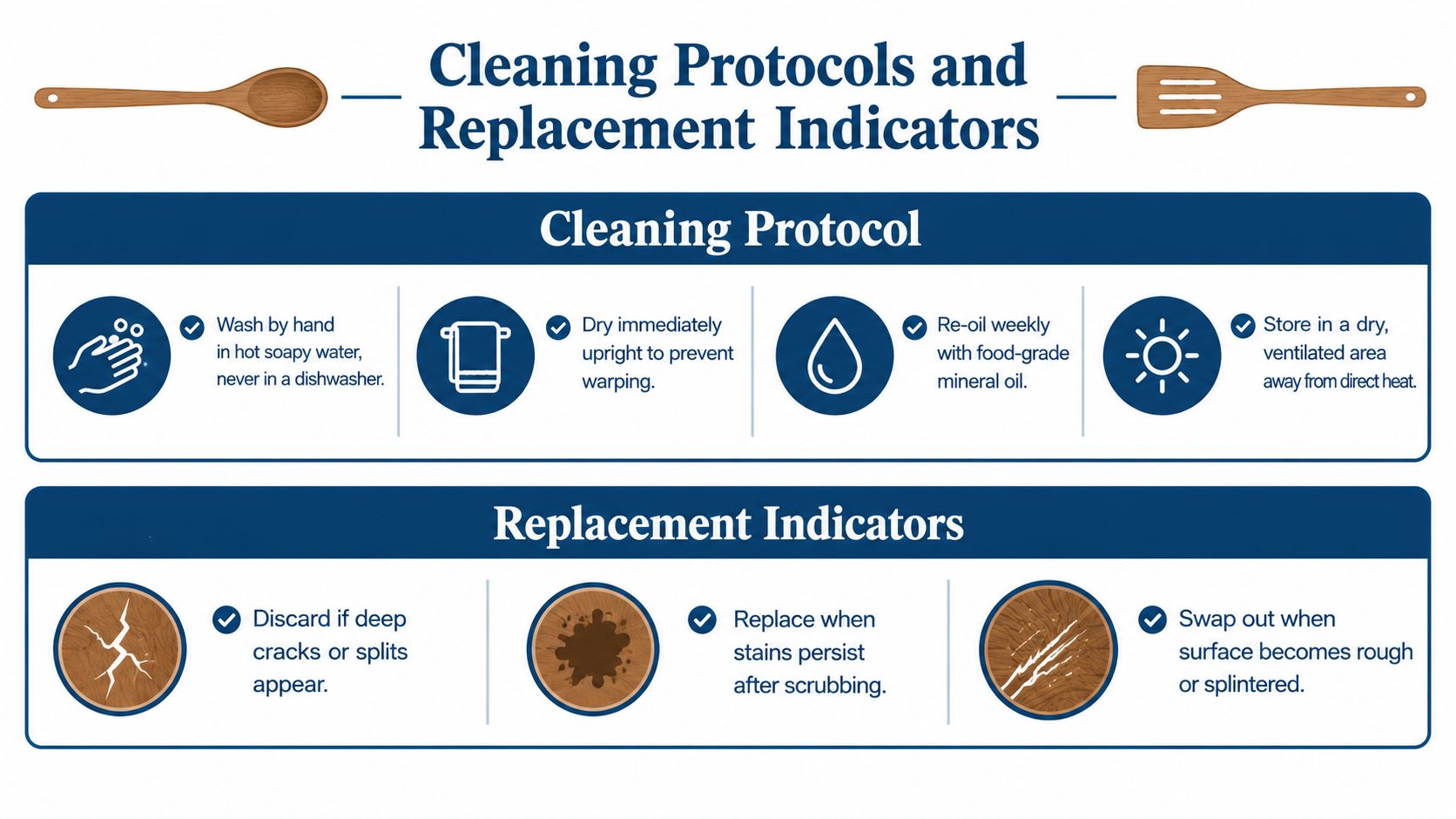
Wooden utensils need a clear care routine, but there isn't one universal method for every product. The manufacturer's instructions and the kitchen's food-safety procedures must control the process. Generic internet advice, such as soaking every wooden tool in bleach or putting every item through a high-temperature commercial dishwasher, can damage the utensil or conflict with its care requirements.
A practical procedure should cover four points:
- Cleaning: Remove food residue promptly using the method approved for that particular utensil and the venue's food-safety system.
- Drying: Dry the utensil thoroughly rather than leaving it wet in a sink, tub or tightly packed container.
- Storage: Keep clean utensils in a dry, organised location where air can circulate and staff can identify them easily.
- Inspection: Check condition during routine smallwares reviews and remove unsuitable items immediately.
Know when the tool has reached the end
A wooden spoon or spatula should be taken out of service when its condition prevents effective cleaning or safe handling. Important warning signs include:
- Cracking or splitting: Deep cracks can trap residue and may allow the utensil to break during use.
- Severe surface damage: A heavily scored or rough surface may be difficult to clean consistently.
- Warping: Distortion can reduce control and make the utensil unsuitable for its intended task.
- Splintering: Loose fibres create a direct food-contact and staff-safety concern.
- Persistent staining or odour: If normal approved cleaning doesn't restore an acceptable condition, the item shouldn't stay in rotation.
The exact service life varies with timber, finish, workload, cleaning method and storage. No responsible supplier should promise a universal lifespan without testing the specific product under the specific operation.
Replacement standard: If staff can't clean, inspect or use a wooden utensil with confidence, it belongs in the replacement process, not back in the drawer.
Food-contact smallwares should be included in the venue's cleaning and inspection records. The purpose isn't to create paperwork for its own sake. It is to make responsibility clear when several staff members share the same prep area and to prevent damaged tools being returned to service unnoticed.
A cheap utensil that fails through poor care can consume more staff attention and generate more waste than a suitable item that receives the correct maintenance. That doesn't mean the most expensive product is automatically better. It means the purchase should be judged by fit for purpose, care requirements and replacement availability, not shelf price alone.
Sourcing Timber and Navigating Purchasing Economics
A wooden utensil's appearance tells a buyer very little about whether it will work in a commercial kitchen. Timber origin, finish, supply reliability and cleaning demands affect the true cost. New Zealand's official trade classification places wooden tableware and kitchenware under HS 4419, including products such as spoons, spatulas, salad servers and boards, as described in the USDA report on New Zealand wood products. That classification helps purchasing teams identify the product category when comparing suppliers.
New Zealand-origin products may use rimu, kauri, macrocarpa, matai or beech. Makers may specify food-safe oils, beeswax or food-grade mineral oil, but a New Zealand supplier is not necessarily selling a locally made item or using local timber. Verify claims that a product is NZ-made, New Zealand-designed or made from New Zealand timber with the manufacturer or supplier.
Assess the total purchase, not just the unit price
A reusable wooden utensil can reduce reliance on some disposable alternatives, but its broader impact depends on timber origin, certification, freight, packaging, cleaning, replacement frequency and end-of-life handling. Imported wooden cutlery and FSC-certified disposable options are also available in the New Zealand market. The word “wooden” alone does not establish a lower overall impact.
Before approving an order, hospitality buyers should check:
- Origin: Where was the timber sourced, and where was the product manufactured?
- Certification: Is forestry or product certification documented?
- Supply continuity: Can replacement stock be obtained consistently?
- Packaging: Does the packaging create avoidable waste?
- Operational fit: Will the utensil withstand the venue's actual workflow?
Imported wooden items also require border planning. New Zealand Customs identifies wooden items as biosecurity risk goods entering the country, alongside food, plants and animal products, in its information on restricted items. Overseas buyers should allow for possible checks and documentation rather than treating freight as a routine parcel delivery.
Purchase decisions should account for failure, labour and replacement stock. The discussion of buying cheaply versus buying once applies to wooden utensils as well as other smallwares. A modestly priced wooden tool may be the right choice for a low-stress task. Stainless steel or silicone may cost more initially or suit a different job, but the correct option is the one that performs reliably within the kitchen's process.
Practical Recommendations for Different Hospitality Venues
A high-volume restaurant should buy for workflow, not visual uniformity. Wooden spoons suit stirring and general sauce work, while stainless steel turners provide the rigidity needed for lifting, turning and scraping. Silicone tools help with bowls, pans and delicate food where a flexible edge reduces waste. The right mix depends on the menu, cookware and cleaning system.
Boutique cafés often need comfortable handling and presentable service pieces. Wooden spatulas can work with suitable non-stick egg pans, while wooden serving utensils may suit front-of-house use if they are approved for food contact and kept in good condition. Set clear staff rules for washing, drying, storage and replacement. A visually tidy utensil station still fails if damp tools are returned to service.
Commercial bakeries should separate light mixing from demanding production tasks. Wooden spoons can handle selected preparation jobs, but dense mixtures and forceful scraping may require equipment with greater strength and rigidity. Stainless steel tools may fit better where mechanical advantage, repeated pressure or a particular cleaning process controls the workflow.
Caterers and institutional kitchens need the same result from multiple users and sites. Labelling, replacement availability and written procedures often matter more than timber species. Training resources, including information relevant to a food safety supervisor 2026, can support the wider food-safety duties connected with utensil management.
Material choice should follow the job. Food, cookware, process and cleaning requirements should decide the material, whether that means wood, stainless steel or silicone. Simply Hospitality can help compare commercial kitchen utensils and smallwares against those criteria. Review suitable equipment at Simply Hospitality, then contact the team for practical advice on setting up utensils around the venue's daily workflow.