


Grease Trap Cleaning: A Practical Guide for NZ Kitchens
A grease trap isn't a disposal unit for a busy kitchen. It's the last line of defence for the wastewater system, and the most effective grease trap cleaning programme starts by keeping as much fat, oil, grease and food solid out of the drain as possible. For New Zealand restaurants, cafés and commercial kitchens, the right approach combines disciplined daily habits, a servicing schedule based on the site, council requirements and equipment specifications, and properly documented professional cleaning. Hospitality doesn't provide grease-trap cleaning, pump-out or plumbing services, so operators need to arrange those services with an appropriate contractor.
What a Commercial Grease Trap Is Actually For
A grease trap should be managed as part of the kitchen's wastewater system, not treated as a place to send every greasy discharge. Pouring oil, sauces and food scraps into the sink increases the material the trap must retain, raising the risk of odours, restricted drainage and overflows.
The easiest grease to remove is the grease that never reaches the grease trap.
A commercial grease trap intercepts fats, oils and grease carried in wastewater before they move farther through the drainage system. Its role is limited by its capacity, design and operating conditions. It does not make fryer oil, food scraps or thick sauces suitable for disposal through a sink.
Upstream controls reduce the burden on the trap, pipework, dishwasher and downstream wastewater system. Plates and cookware should be scraped before rinsing, food solids should be removed separately, and fats and oils should be collected rather than washed away.
Prevention starts at the sink
Every sink should function as a washing station, not a waste bin. Sink strainers or drain baskets can catch particles before they enter the pipework, but staff still need clear procedures and supervision.
Used cooking oil requires its own collection process. It should not be poured into a sink because it is warm or appears to flow freely. As grease cools, it can adhere to pipe surfaces. Food solids can combine with it and form a persistent restriction.
Workflow design makes the correct behaviour easier. A well-planned stainless steel sink setup can support scraping, rinsing and separation, but equipment cannot replace training or daily checks.
The trap is part of a wider system
Grease control also affects dishwashing, food preparation and waste handling. Scraping plates before warewashing reduces the solids entering the dishwasher and drainage system. Wiping heavily soiled pans before washing reduces the grease that hot water and detergent must carry away.
That link matters in busy commercial kitchens. Better separation at the sink can reduce strain on dishwashing equipment and help the grease trap operate within its intended conditions.
Hospitality supplies commercial kitchen equipment and cleaning-related products, but it does not clean grease traps or conduct service visits. Venue operators need both parts of the system: practical controls inside the kitchen and professional servicing when the trap requires inspection, cleaning or pump-out.
NZ Compliance Rules and Cleaning Frequencies
New Zealand operators shouldn't choose a grease trap cleaning frequency from a generic calendar alone. Requirements can be set by the local council, the venue's trade-waste consent, the trap manufacturer and the actual grease load produced by the kitchen.
Several New Zealand council sources converge on a practical minimum of about monthly attention for conventional traps. Clutha District Council says cleaning once a month is usually alright, while Central Hawke's Bay Council says a conventional grease trap should be checked at least monthly. WasteMINZ-based guidance used by councils also states that passive traps generally require servicing at least every 3 months, with the exact frequency determined by the Trade Waste Officer and the business's grease load. These requirements should be read alongside the particular council's current conditions, rather than treated as a universal schedule. Clutha District Council's grease-trap guidance explains the local expectations and record-keeping obligations.
What determines the interval
A restaurant producing mainly grilled food may place a different load on its trap from a high-volume kitchen handling frying, sauces and rich prepared foods. Capacity and operating volume matter just as much as menu style.
The servicing decision should account for:
- Grease load: The amount of FOG entering wastewater affects how quickly the trap's retention capacity is used.
- Trap capacity: A larger or correctly sized trap may support a different programme from a compact under-sink unit.
- Operating volume: Meal production, dishwashing activity and peak service patterns influence accumulation.
- Manufacturer requirements: The system may specify inspection, cleaning or maintenance procedures that operators must follow.
- Local trade-waste conditions: Council requirements can override informal routines and may require an approved contractor.
Tasman District Council guidance places cleaning at 4–6 weeks, or sooner depending on trap size and usage, and identifies 20% grease loading as a service trigger under the cited New Zealand Building Code G14/VM1 1.2 guidance. Across New Zealand councils, a common compliance threshold is that sediment and fat, oil and grease layers shouldn't exceed 20% of the trap depth or volume. The Clutha District grease-trap leaflet sets out structural and cleaning expectations for passive traps.
Capacity and consent conditions
Trap design also affects maintenance. Clutha District's leaflet states that passive grease traps must have at least two chambers and a minimum 1,000 L capacity. Hamilton requires conventional tank grease traps to have at least 500 L functional capacity, with sizing provisions based on served meals, seated people, peak flushes and connected dishwashers, as well as at least one hour retention time. Those requirements come from the Hamilton Trade Waste and Wastewater Bylaw.
The New Zealand Building Code compliance document for foul water also addresses trap provision and capacity. It requires grease traps in specified sink and non-housing building situations, with a minimum capacity of at least twice the capacity of connected sanitary fixtures and appliances, and no less than 100 litres, as set out in the G13 Foul Water compliance document.
Records are part of compliance, not paperwork for its own sake. Cleaning records must be kept on-site and made available during inspection in relevant districts, and servicing commonly needs to be performed by an approved liquid-waste operator. Napier requires annual submission of servicing and cleaning records, while Auckland requires service records to be retained for 5 years under its Trade Waste Bylaw. Auckland also requires used oil and fats to be collected rather than discharged to the public wastewater system, with discharge below 20 L/minute, as specified in the Auckland Trade Waste Bylaw.
For Auckland-region systems, wastewater guidance bases cleaning on observed accumulation, with cleaning required when grease reaches 75% of grease retention capacity. It also specifies storage capacity of four times the kitchen's average daily design flow volume and at least one day's retention for peak wastewater flow. Those details appear in Auckland-region on-site wastewater guidance.
Operators should confirm their own council's current trade-waste requirements before setting a routine. The right schedule is the one supported by the system's condition, observed accumulation, consent conditions and servicing records.
A compact quick-service kitchen may also need to plan how cooking and regeneration equipment affects workflow around sinks and warewashing. For example, the Menumaster MOC5241 2400W Heavy-Duty Microwave is designed for single-portion regeneration, burger finishing, bun warming and rapid sauce or side-dish heating, with a 9-litre cavity and 2400W output. That type of equipment doesn't clean a grease trap, but choosing equipment that suits the menu can support a more controlled kitchen workflow.
For operators reviewing related obligations, the New Zealand food safety regulations guide provides useful wider compliance context.
Professional Servicing and Proper Waste Disposal
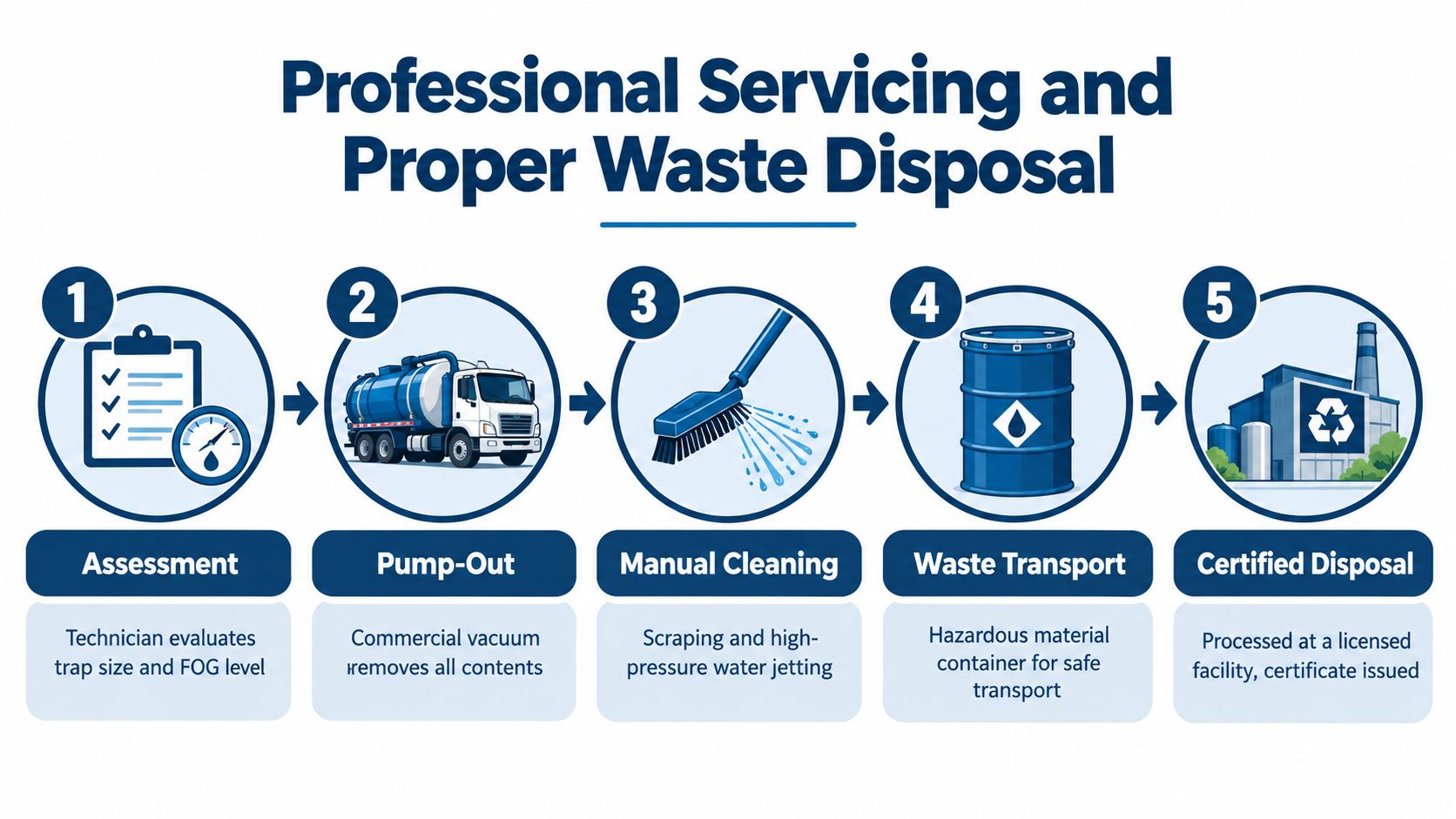
Hospitality doesn't employ grease-trap cleaning technicians, so it doesn't present a servicing sequence as its own field procedure. For larger commercial systems, the appropriate contractor should assess the particular trap, follow the manufacturer's requirements and meet applicable council and waste-disposal rules.
At a high level, professional grease trap cleaning can involve:
- Accessing the trap: The contractor identifies the trap, confirms safe access and assesses its condition.
- Removing accumulated material: Fats, oils, grease, settled solids and remaining contents are removed using suitable equipment.
- Cleaning internal components: Relevant surfaces, chambers, lids and components are cleaned in line with the system requirements.
- Checking the system: The contractor checks for obvious condition or operating issues and confirms that the trap can return to service.
- Managing removed waste: The extracted material is transported and disposed of through an appropriate authorised pathway.
- Returning the trap to operation: The system is restored according to the trap's requirements, with service details recorded.
The exact sequence can vary between passive traps, larger commercial systems and manufacturer-specific designs. Council guidance cited by New Zealand authorities also describes a standard cleaning sequence that removes the top FOG layer, then bottom solids, then remaining liquid, followed by cleaning the sides and refilling with cold water. That work should be performed by the party authorised for the site and system.
Can a business clean its own trap
The answer depends on the council, location, trap type and consent conditions. New Zealand guidance isn't uniform. Some councils describe self-cleaning with proof of cleaning every 6 months, while others require a council-approved contractor or state that servicing must follow manufacturer specifications. The New Plymouth District Council Trade Waste Bylaw illustrates why operators need location-specific confirmation rather than relying on informal advice.
A small under-sink trap may allow limited internal tasks between professional services, if the council and manufacturer permit them. Those tasks shouldn't be confused with full pump-out or commercial servicing. Staff must also have suitable protective equipment, a safe procedure and a way to contain removed material.
Waste must never be transferred into another sink, stormwater drain or general wastewater connection. Removed FOG and solids need appropriate handling by an authorised liquid-waste or waste contractor. The destination of the waste is part of compliance.
For contractor planning, operators can keep service contacts with other trade information in the same place. The SimplyConnect service resource can help businesses think about how trade contacts are organised, although grease-trap servicing still needs to be arranged with a suitable provider.
Chemical products marketed to dissolve grease into wastewater shouldn't be used unless the trap manufacturer and applicable wastewater requirements specifically support them. Moving grease further down the pipe isn't the same as removing it responsibly.
Daily Kitchen Practices to Prevent FOG Buildup
The strongest grease trap cleaning programme begins before the first wash cycle. Staff need clear instructions about what belongs in a bin, what belongs in used-oil collection, and what can safely enter the sink.
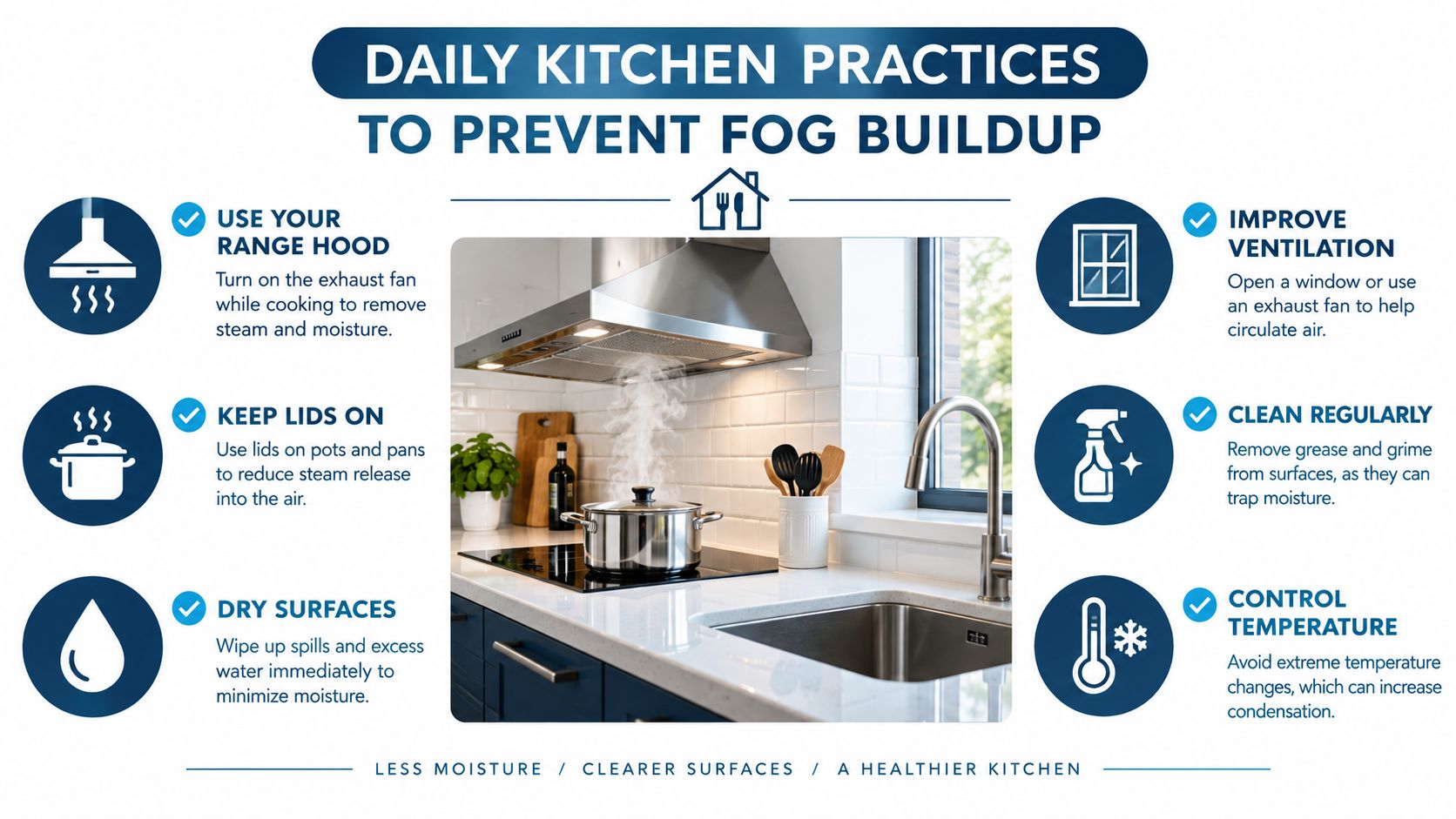
A practical kitchen routine includes:
- Scrape plates and cookware: Remove food solids into the appropriate waste stream before rinsing.
- Use sink strainers: Fit suitable baskets or screens to catch solids at preparation and wash-up sinks.
- Wipe pans first: Use a disposable towel or suitable collection method to remove excess oil before washing.
- Separate fryer oil: Store used cooking oil in sealed containers for collection rather than discharging it.
- Train every shift: Include FOG handling in induction, refresher training and close-down checks.
- Inspect routinely: Look for accumulation, odours, leaks and changes in drainage before they become service interruptions.
The aim isn't to keep staff from washing dishes properly. It's to stop the dishwasher and drainage system from carrying waste that could have been removed at the bench.
Dishwashing and drainage work together
Scraping plates reduces the solids entering the pre-rinse area. Wiping greasy cookware reduces the oil load entering the wash-up sink. Those actions can also support commercial dishwashing performance because the machine has less heavy soil to remove before its wash and rinse stages.
The result is a more controlled workflow. Staff handle waste where it's easiest to separate, while the dishwasher handles warewashing rather than acting as a transport route for excessive grease and food debris.
A food-waste disposer may appear convenient, but operators should assess it against local trade-waste conditions and the venue's wastewater system before installation or use. The food waste disposer planning article provides relevant equipment and workflow considerations.
Staff need visible rules
A short sink-side procedure is more useful than a policy stored in an office. It can state:
- Scrape plates before rinsing.
- Keep fryer oil out of sinks.
- Empty drain baskets into the designated waste stream.
- Report slow drainage or odours to the shift supervisor.
- Record required inspections and cleaning activity.
Grease also accumulates outside the trap. Operators dealing with floors, splash zones and extraction areas may benefit from practical commercial hood and floor degreasing tips, while keeping those cleaning chemicals and removed grease out of wastewater unless the relevant requirements allow their discharge.
Troubleshooting Common Grease Trap Problems
Warning signs usually indicate that the maintenance programme needs attention, not that the kitchen needs a stronger chemical. Odours, slow drainage, visible accumulation, backups and overflow all deserve prompt investigation.
An odour may mean the trap is overdue for servicing, the lid or seals need attention, the system isn't operating correctly, or waste has accumulated in a connected area. Slow drainage can point to a restricted pipe, excessive solids, a full trap or a capacity problem. Visible FOG or sediment indicates that inspection and servicing shouldn't be postponed.
The first response should be operational, not improvised.
- Stop adding wastewater where practical: Reduce activity feeding the affected system while the issue is assessed.
- Protect the work area: Keep staff away from contaminated water and use appropriate workplace hygiene procedures.
- Contact the right contractor: Use a grease-trap or liquid-waste contractor familiar with the system and local requirements.
- Check the records: Compare the symptom with the last inspection, cleaning or pump-out entry.
- Document the incident: Record what happened, what was stopped and who was contacted.
Do not treat a chemical odour fix as grease trap cleaning. Masking the smell doesn't remove accumulated FOG, settled solids or an underlying capacity issue.
Chemical treatments intended to dissolve grease into the wastewater system can push the problem downstream rather than remove it. They may also conflict with the trap manufacturer's instructions or local trade-waste requirements. Unless the manufacturer and applicable wastewater authority specifically support a treatment, operators should avoid it.
An overflow requires a more immediate response. Activities that continue sending wastewater into the affected system should be stopped where possible, and an appropriate professional contractor should be contacted. Staff shouldn't attempt to move the material into another drain or use an improvised plumbing solution that spreads the contamination.
Prevention remains the better measure. A trap should be serviced before these symptoms appear, based on observed accumulation, the site's approved maintenance requirements and the documented history of the system.
Building a Compliant Maintenance and Record-Keeping System
A grease trap log should be simple enough for staff to maintain during a busy service, but complete enough to support council inspection and contractor follow-up. New Zealand guidance establishes that cleaning records must be retained on-site and shown during inspection in relevant districts. A record also gives the venue evidence when it needs to adjust the maintenance programme.
A practical log can include:
- Date and time: Record each inspection, permitted manual clean or professional service.
- Condition observed: Note odour, visible FOG, sediment, drainage changes or other issues.
- Action completed: Identify whether staff performed an allowed routine task or a contractor completed servicing.
- Contractor details: Keep the business name, contact details and relevant authorisation information.
- Waste documentation: Retain the service record and any disposal documentation supplied by the contractor.
- Follow-up required: Record repairs, access issues, capacity concerns or changes to the operating schedule.
Select the contractor before an emergency
The appropriate contractor should understand commercial grease traps, liquid-waste handling and the local council's requirements. The venue should confirm who is authorised to service the system and how extracted FOG and solids will be managed after removal.
Emergency contact details shouldn't sit only in an owner's phone. They can be stored with the kitchen's equipment service contacts, included in the venue's opening and closing procedures, and made available to the manager on duty.
The maintenance schedule should also be reviewed when the business changes its menu, increases production, adds dishwashing equipment or alters the kitchen layout. A trap that worked adequately under one operating pattern may require reassessment after a significant workflow change.
Good records work alongside good cleaning procedures. The cleaning programmes for cafés resource can help operators structure wider cleaning responsibilities, while grease-trap service records remain a specific trade-waste requirement.
A proactive system has three parts: prevent unnecessary FOG at the sink, inspect and service the trap according to the site's requirements, and keep evidence of every relevant action. That approach gives operators a clearer response when drainage changes and helps prevent routine kitchen waste from becoming a trade-waste problem.
Hospitality supplies commercial dishwashers, kitchen equipment, waste-management products and cleaning supplies that can support better upstream grease control, although it doesn't provide grease-trap cleaning, pump-out or plumbing services. Visit Simply Hospitality to discuss equipment and workflow requirements for a restaurant, café or commercial kitchen.